THINGS

Uncategorized

“No ideas but in things…”

William Carlos Williams

Beginning in the 1980’s, I began to think that ordinary objects were full of existential meaning and that no matter the artist, era or style; no matter the intent the conveyor of intention was a thing. Picasso’s Guitars, Duchamp’s Windows, Klee’s Fish but also Rembrandt’s costumes, Leonardo’s table setting and all Northern Painting of the 15th and 16th Century bares witness to Williams’ maxim.

I have tried to think of the epitomes of our era and which objects are characteristic of our unique time and place. Because of the pervasive nature of the mass media the world seems to be rife with calamity and disaster.

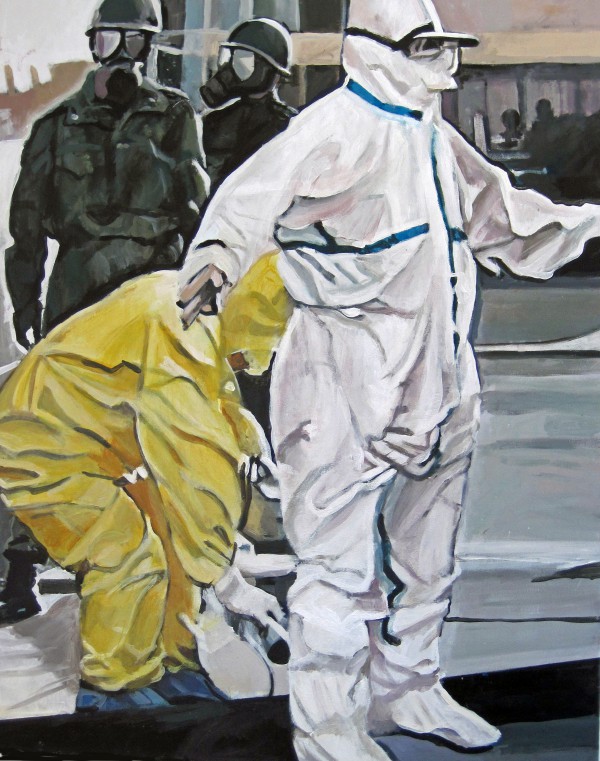
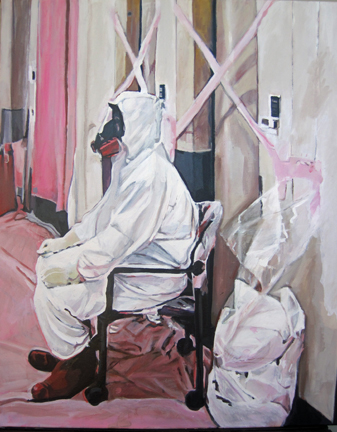
Hazmat suits, goggles,  life preservers and plastic garbage bags are the stuff we are made of.

These are all optimistic objects which speak of survival.
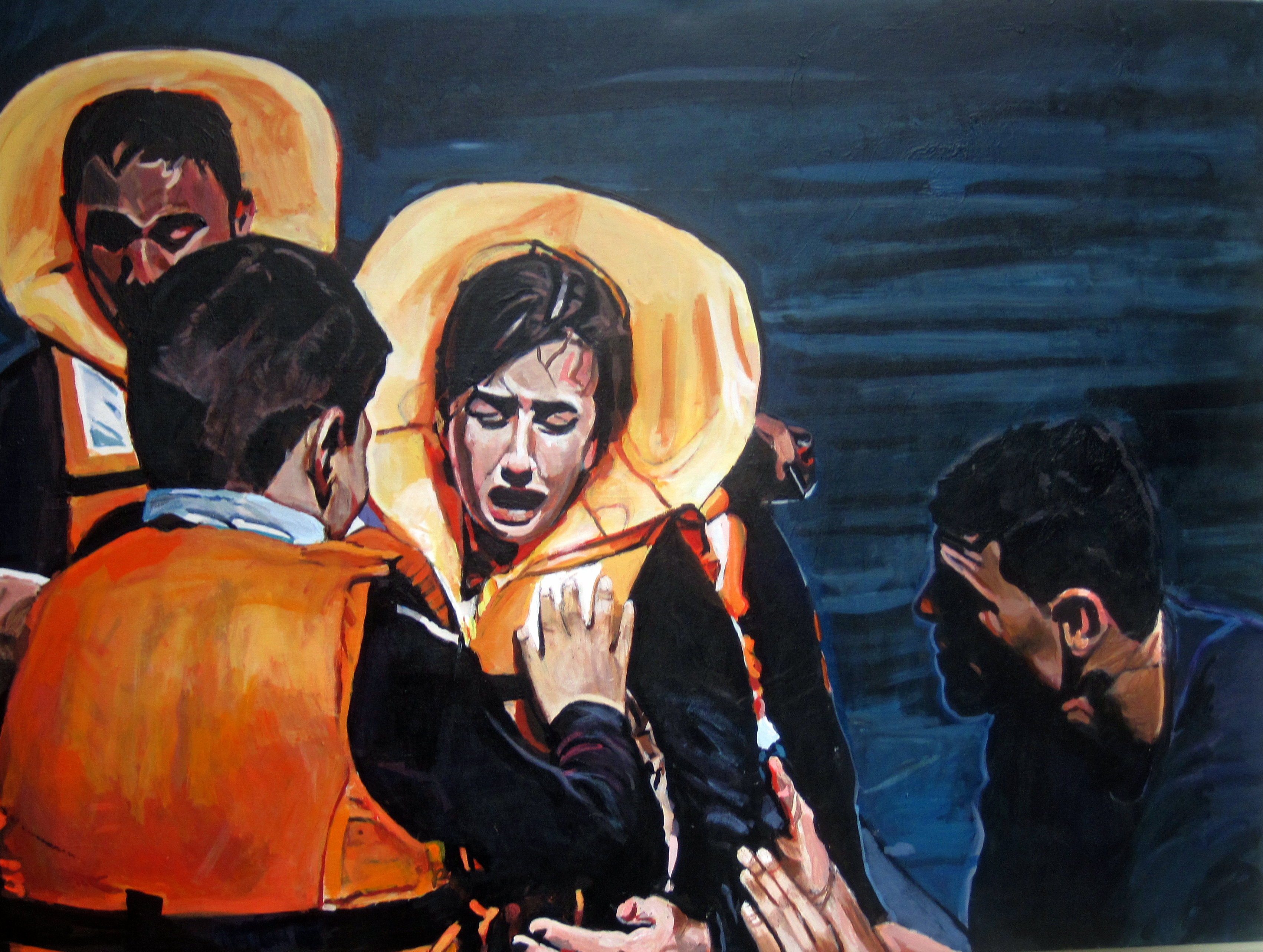
rescue at lesbos

Working In Series:

Uncategorized

Ever since the 1980’s I have worked in Series format. It seems to me that one painting alone cannot do justice to a complex theme. My influence here is of course Thomas Cole but when I was a student, it seemed to me that all my favourite artists were working in Series. Everyone from Johns , Marisol, Dine and Warhol and later Close had staked paths which emphasized the continuity and interrelation of themes. Of course the work of Alex Katz, Alfred Leslie and Philip Pearlstein often was inherently serial in nature but so too were the paintings of Dekoonig, Kline and Reinhardt. I think that “TYPOLOGY” is one the basic categories of thinking  and therefore working in series makes profound sense.

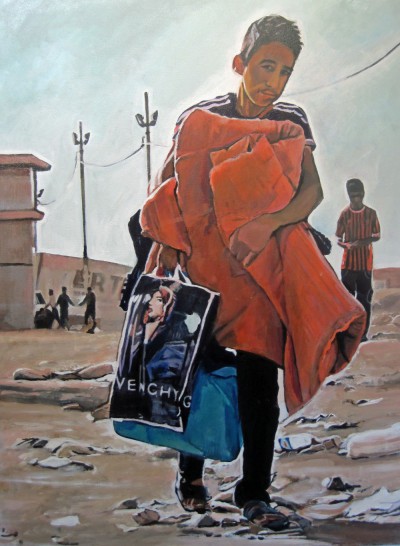
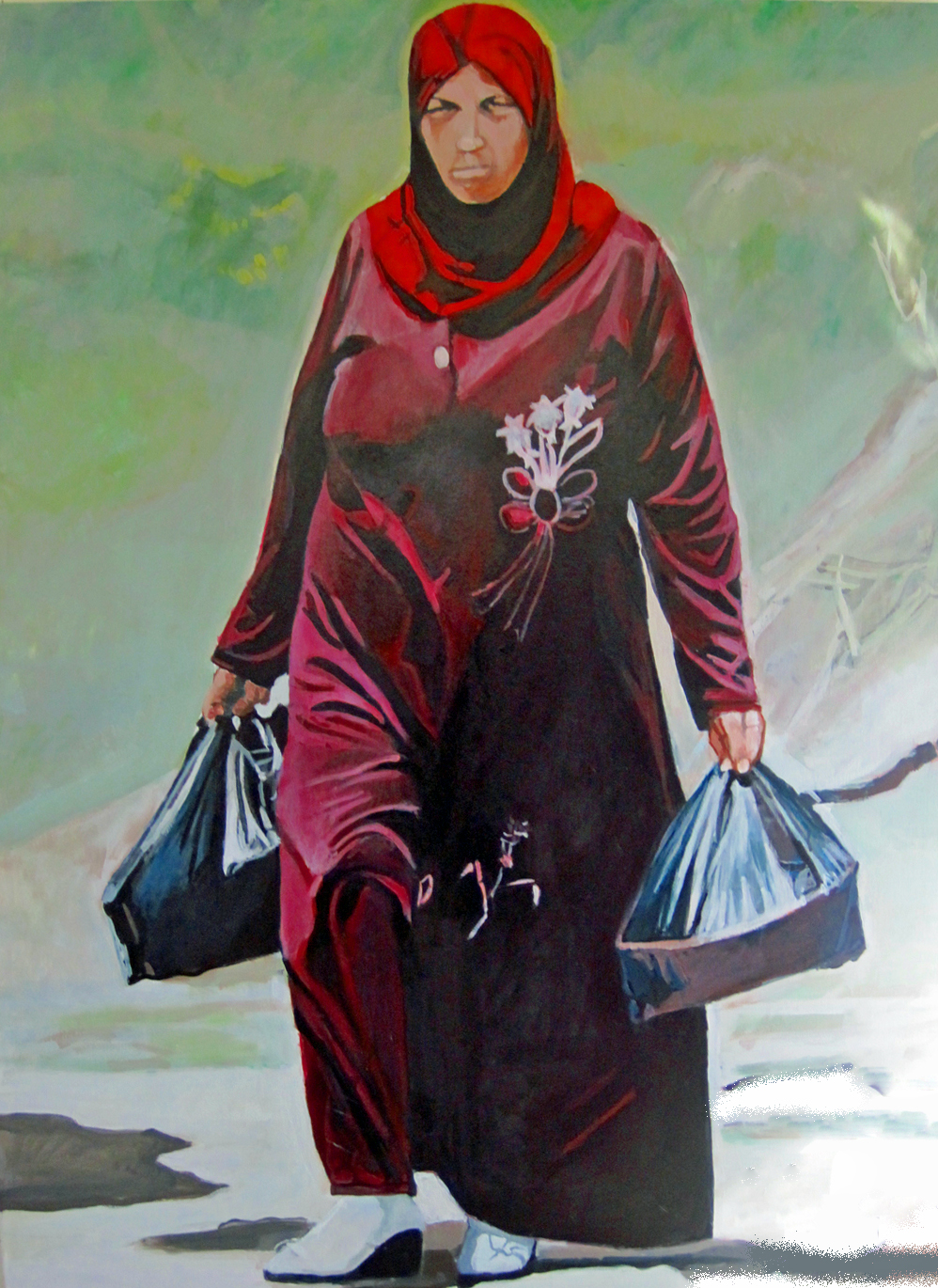
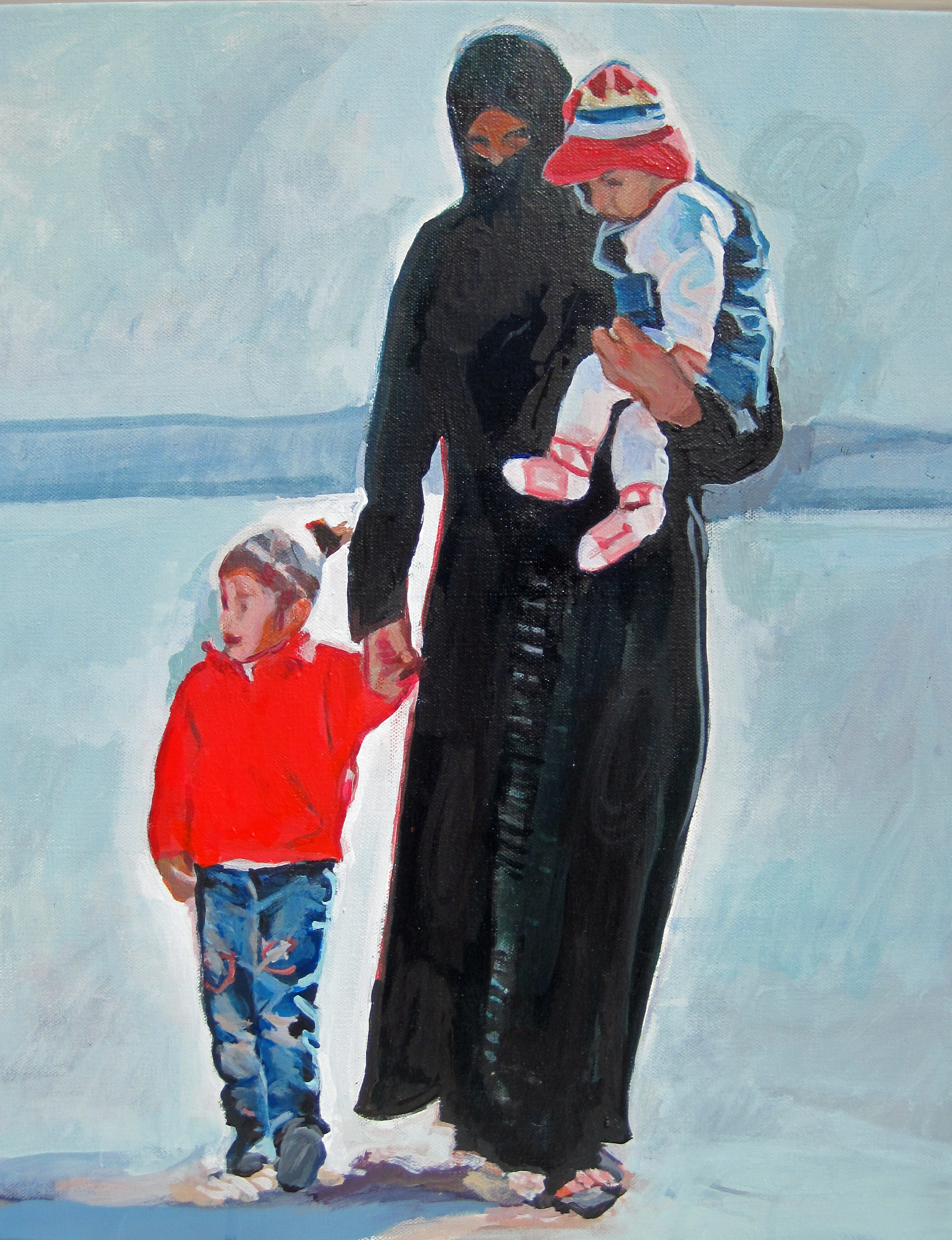
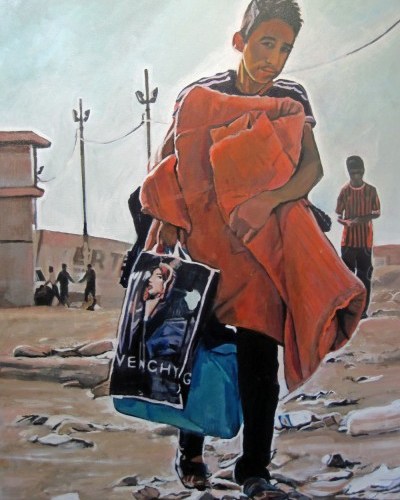
Below are some of the paintings I have been working on in a Series called Syrian Refugees.

Syrain man withrugs2    syrian boy   seatedrefugee

redscarfptg2015_edited-1     syrian refugee camp,turkey

LANDSCAPE

Uncategorized

In recent years my paintings have explored the precarious relationship between Technology and Nature.

In our time, Climate Change has given way to a Nature that can no longer be seen as separate and apart from extended objects.

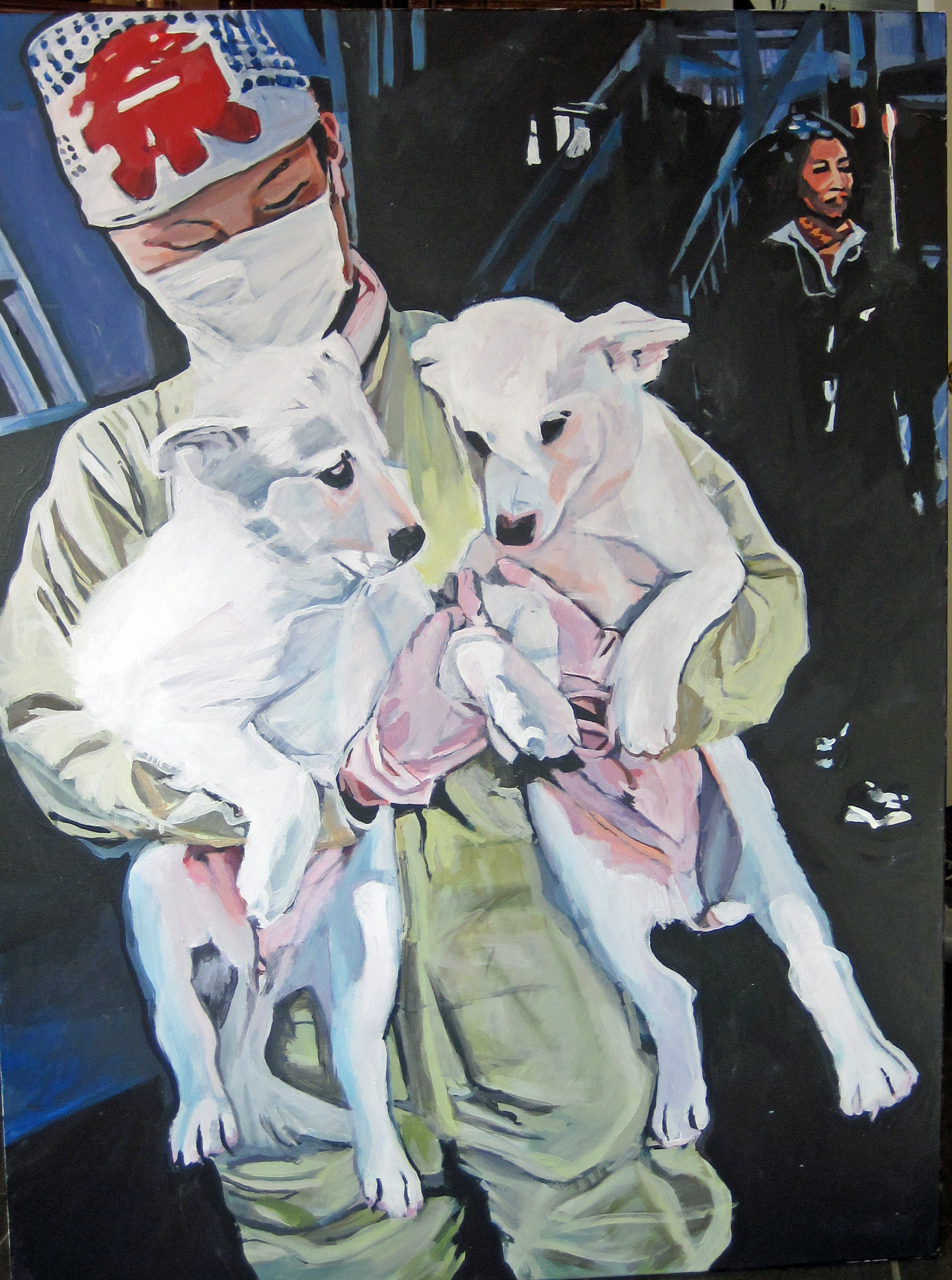
The 2012 Tsunami and the Meltdown at the Fukushima Nuclear Plant is a case in point; The tsunami was made more dangerous by the human-made events before and subsequent to the great wave. In the aftermath an army of workers dressed in paper suits went about to measure and to clean up after the devastation with shovels and even sticks— a puny response but a revealing one.

I am interested in these responses because I believe they reveal who we really are despite our advanced technological civilization.

Although I do not use the term “Realist” to describe these works, Art History informs my work. In the Nineteenth Century the Industrial Revolution had caused cultural anxiety. In Europe, positivist thinking produced Realism; In North America, Thomas Cole warned of the decadence of Europe* in which hubris had led civilization to ignore Nature and was thus, in peril. He developed a painting style in which narrative and philosophical discourse was embedded in Landscape. His optimistic outlook advocated for a “Development” in which Civilization and Nature would seek balance in the New World; although he was too optimistic, he realized the central tension in North American painting in every genre that was to follow.

* The Course of the Empire Cycle

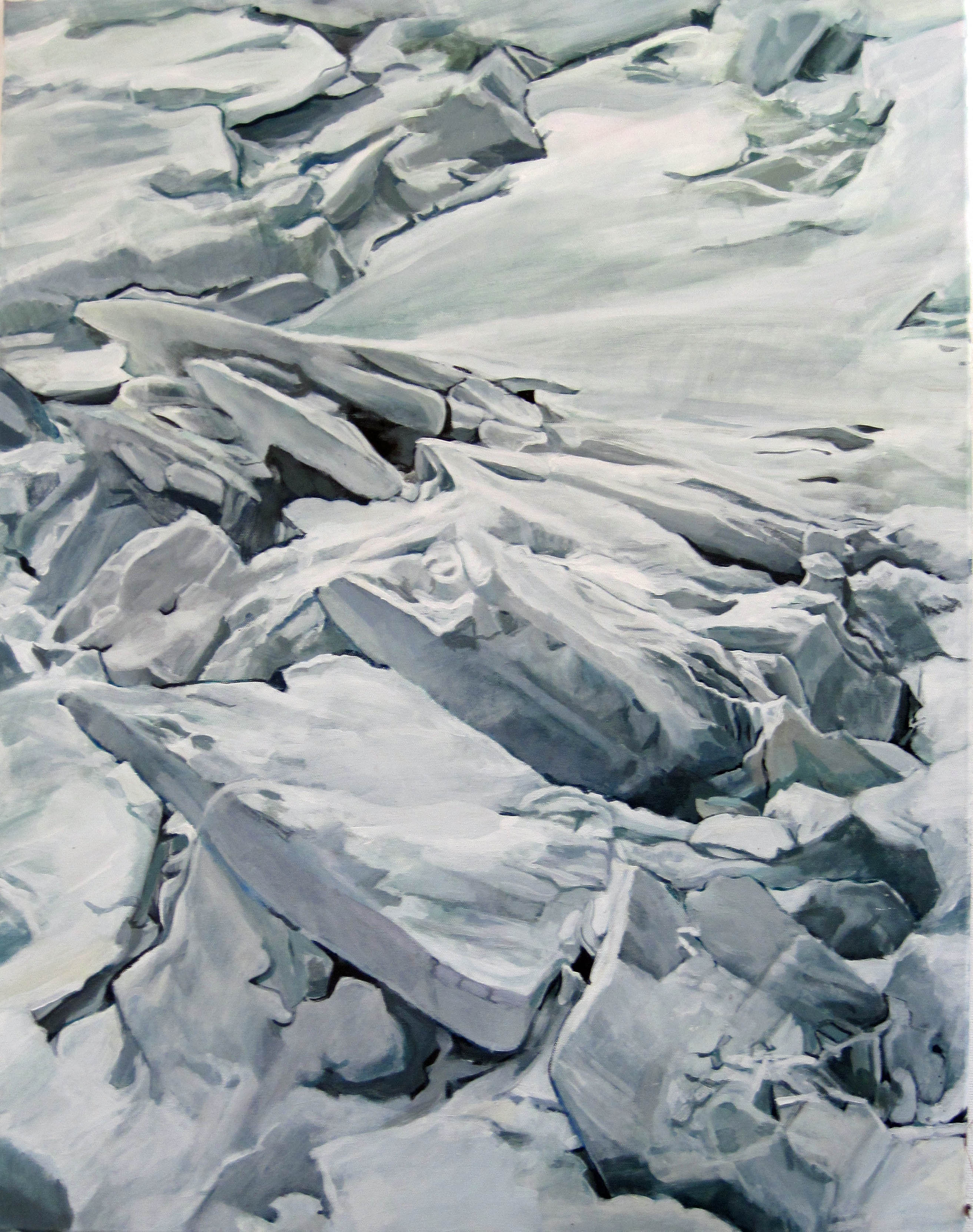
B0003078 Ice Floe, Saint John River, 2011.

ANTHONY CLEMENTI Paintings

Uncategorized

ANTHONY CLEMENTI

“Clementi’s painterly interpretations of sites of catastrophes are depicted with a critical (and perhaps deliberately neutral) gaze that lifts his carefully rendered eerie realities to a level of social protest. In what appears to be a rapid perhaps even urgent application of pigment, he describes visual truths in a manner that alludes to the transient visual vocabularies of journalistic/ documentary verisimilitude.

His are dire warnings of the approaching dystopia that may, in fact, have already arrived. “

Tom Smart

CAPTURE 2014

Nova Scotia Realism

ANTHONY CLEMENTI has been an artist, exhibition curator and art educator for more than 30 years. He participated in more than 60 exhibitions in North America and Europe. He has taught at Pratt Institute , Nassau College , New York Institute of Technology and Mount Saint Vincent University in Nova Scotia , Canada. He has been a Executive Director of the Children’s Museum in Utica, and has curated exhibitions in New York and was a principle in Non-Profit Support System advising non- profits and Art organizations in Upstate New York.

In the 1980’s and 1990’s Tony helped organize and exhibited in several landmark exhibitions in what became known as the Artist Curated Movement. These include Artist Call, Joint Forces, Carnival Knowledge and the Survival Show.

He presently lives and works in Nova Scotia, Canada with his wife Patricia Caryi.

Contact: clementianthony52@gmail.com