Uncategorized
Paintings: 2020
Uncategorized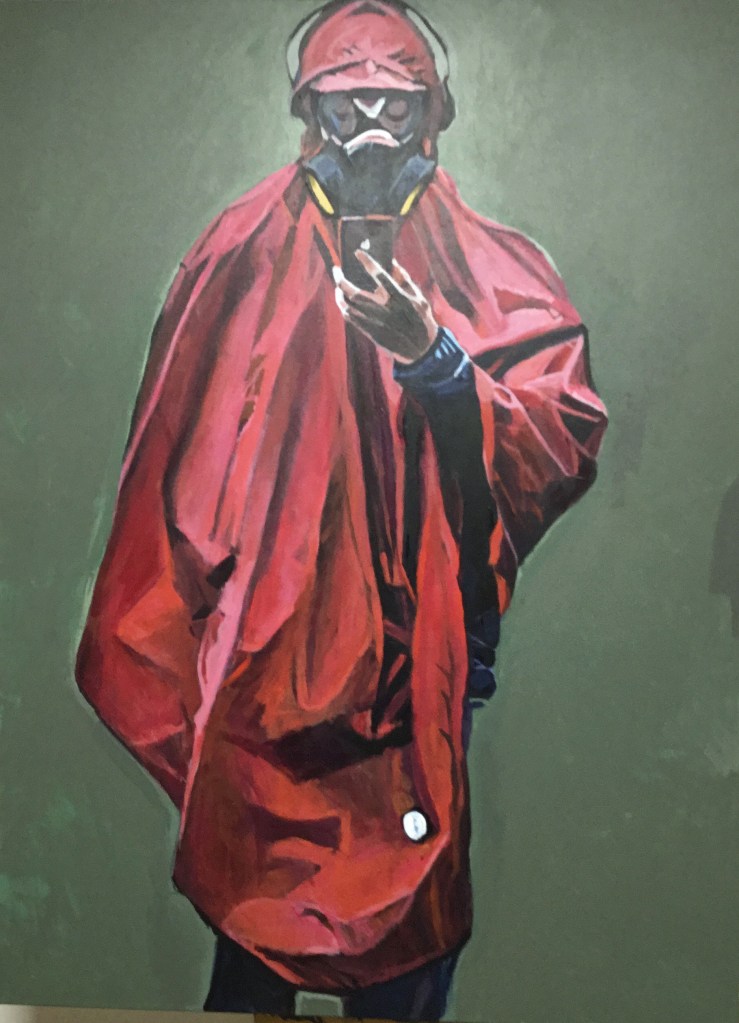
Covid 19 Series: Man In Red Poncho, Acrylic on Canvas, 40X30″ 2020

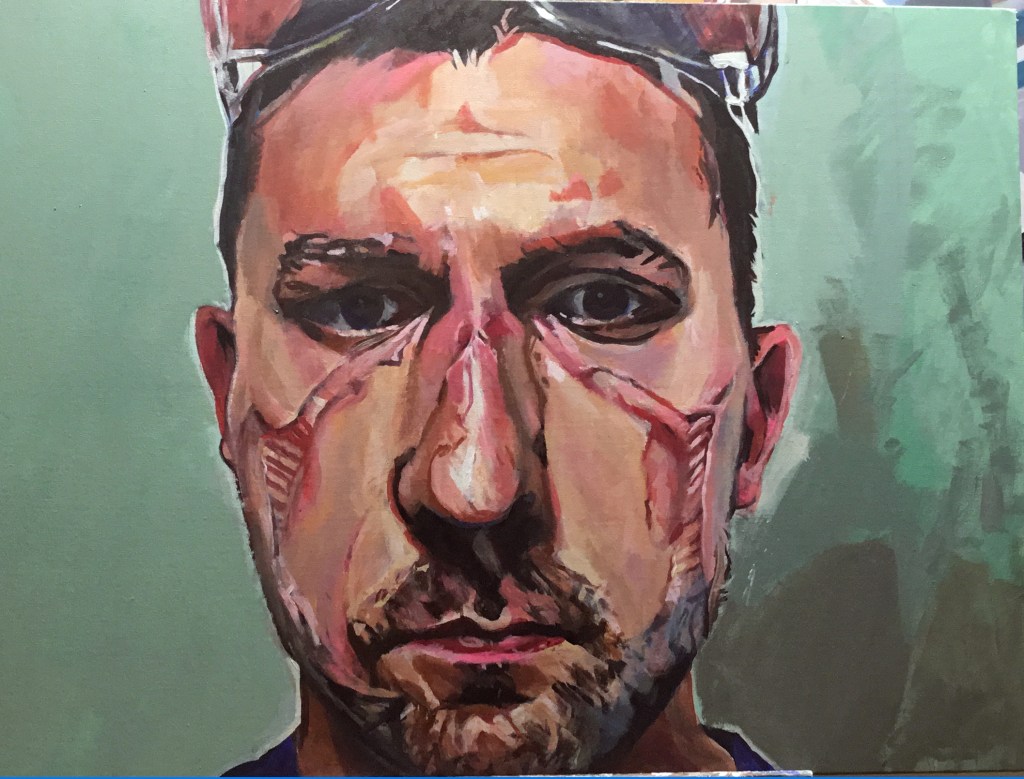
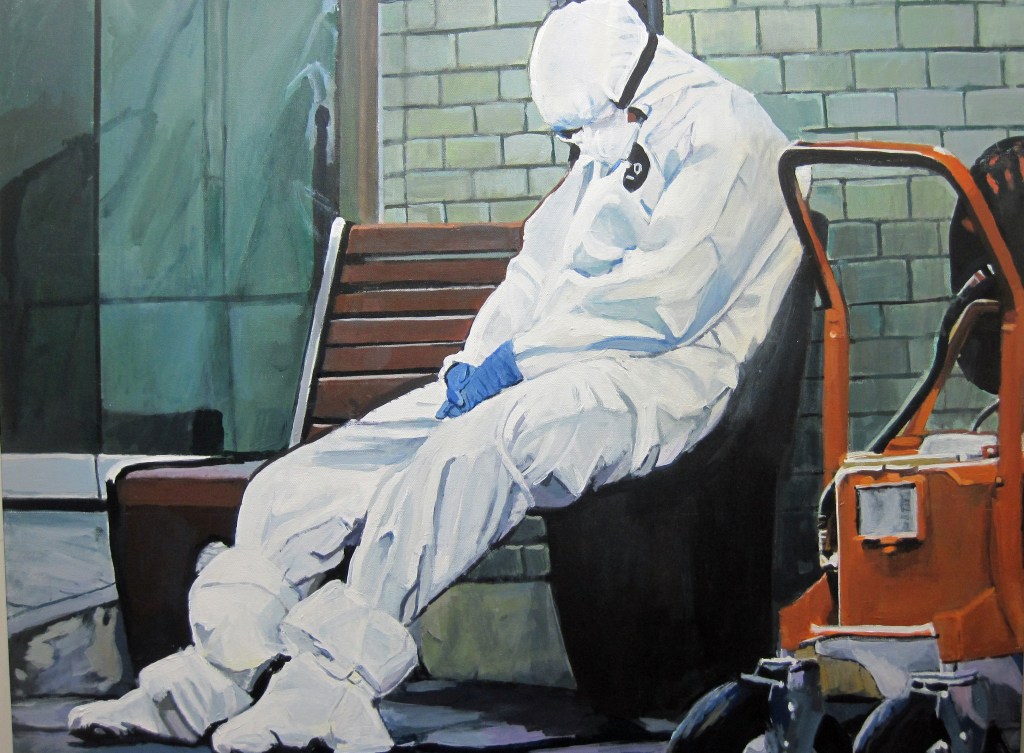
Covid 19 Series: Take Five, Korea, 40×30″, 2020.
Undocumented / Separated
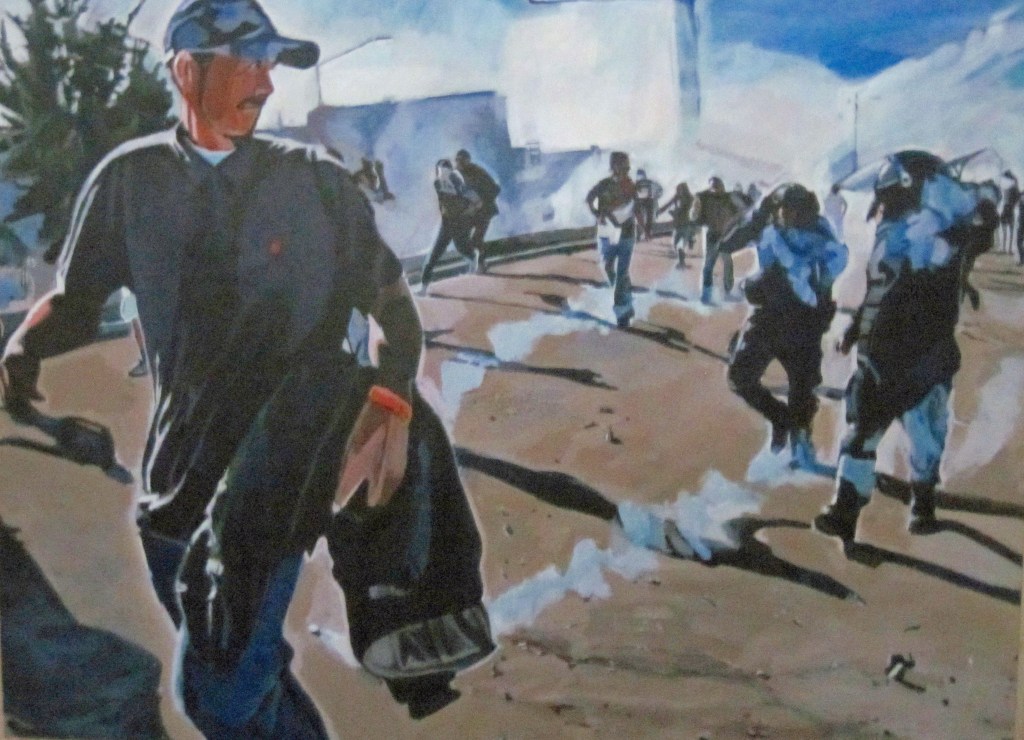
UncategorizedSince the first days of the Trump Administration, The Southern Border of the United States has become a Crisis Zone. Cruel Tactics by the U.S. Government have created what some have called “concentration camps for migrants, Stranded Mothers and children on the Mexican Side of the Border, many of them from Central America. People have been tear gassed, have been subject to DNA tests and children have been separated from their parents.
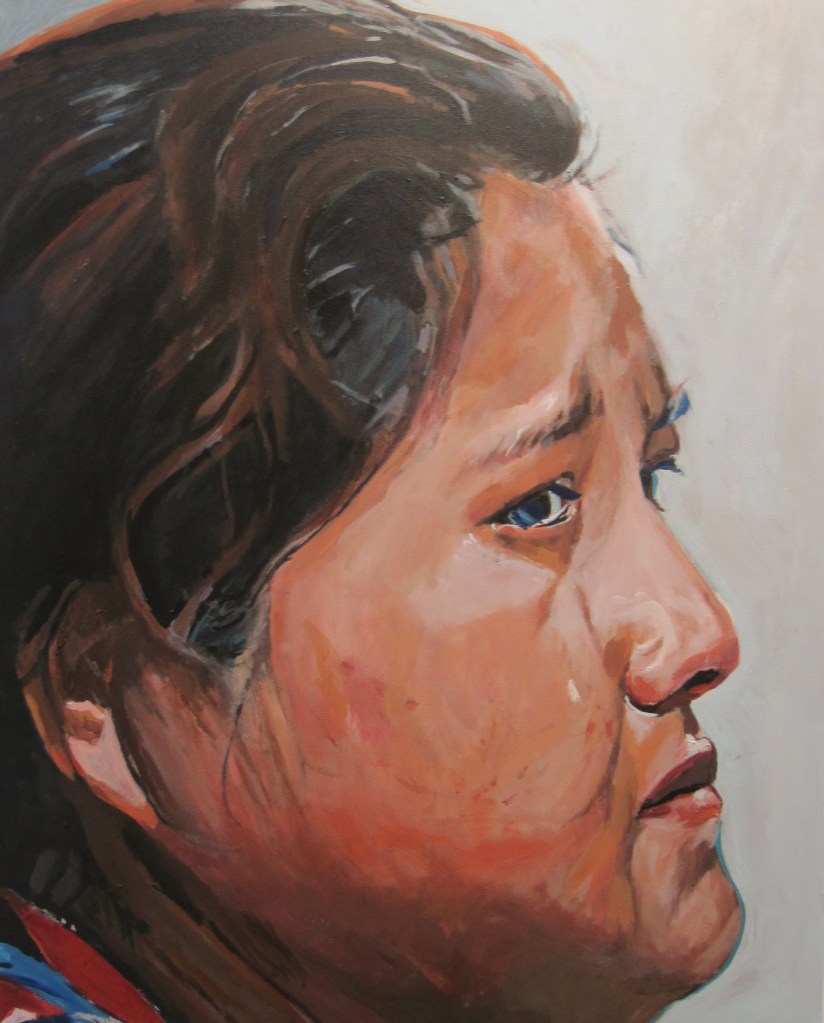
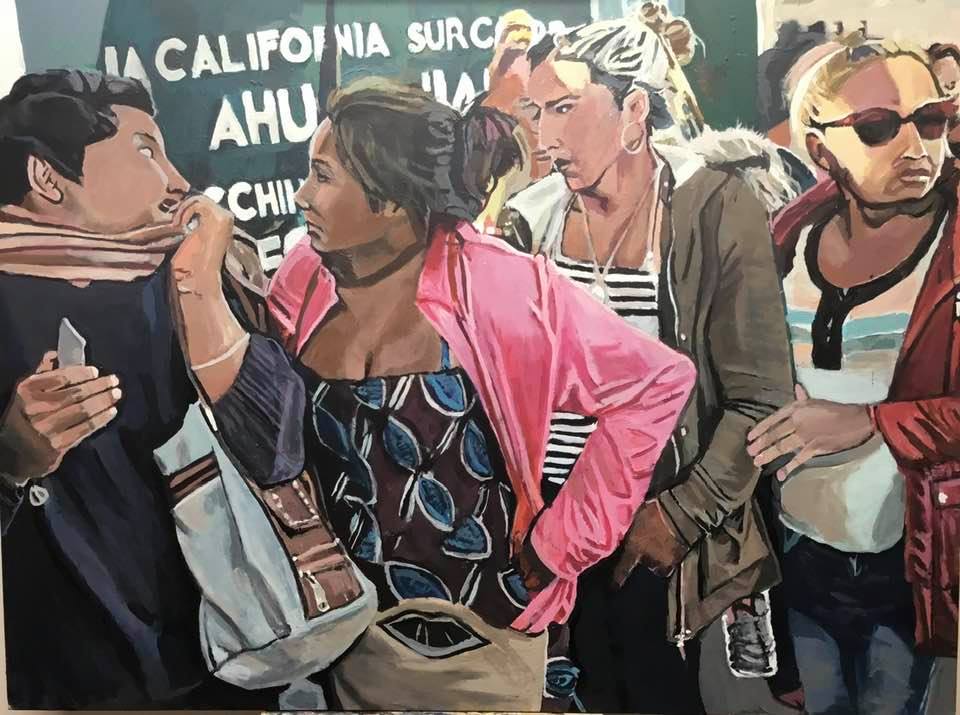
Seperated: Miriam, Inez and Rosalita, 2018,; Lineup at Eagle Pass, 2020.
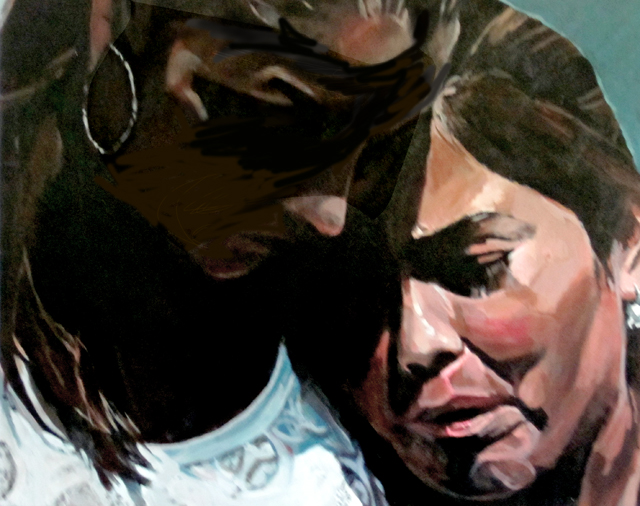

Tijuana
Tijuana: Running Man, , Man With Rug, Tear Gas I, Tear Gas II, 2018, Tear Gas III.
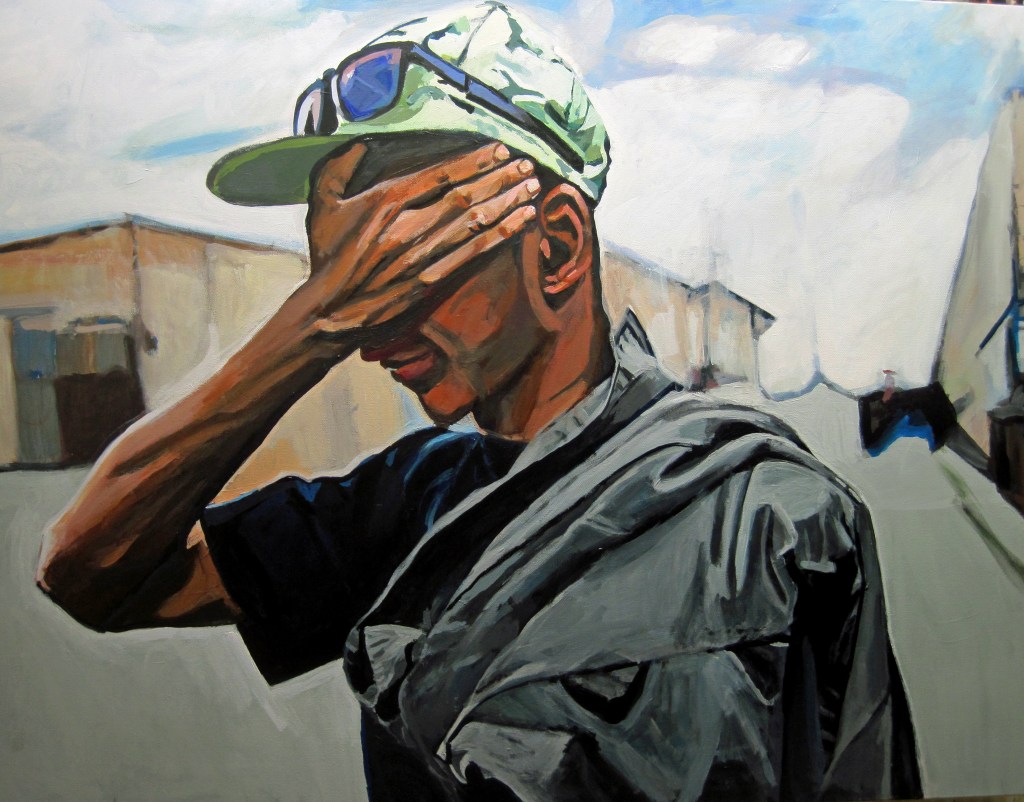

Ice
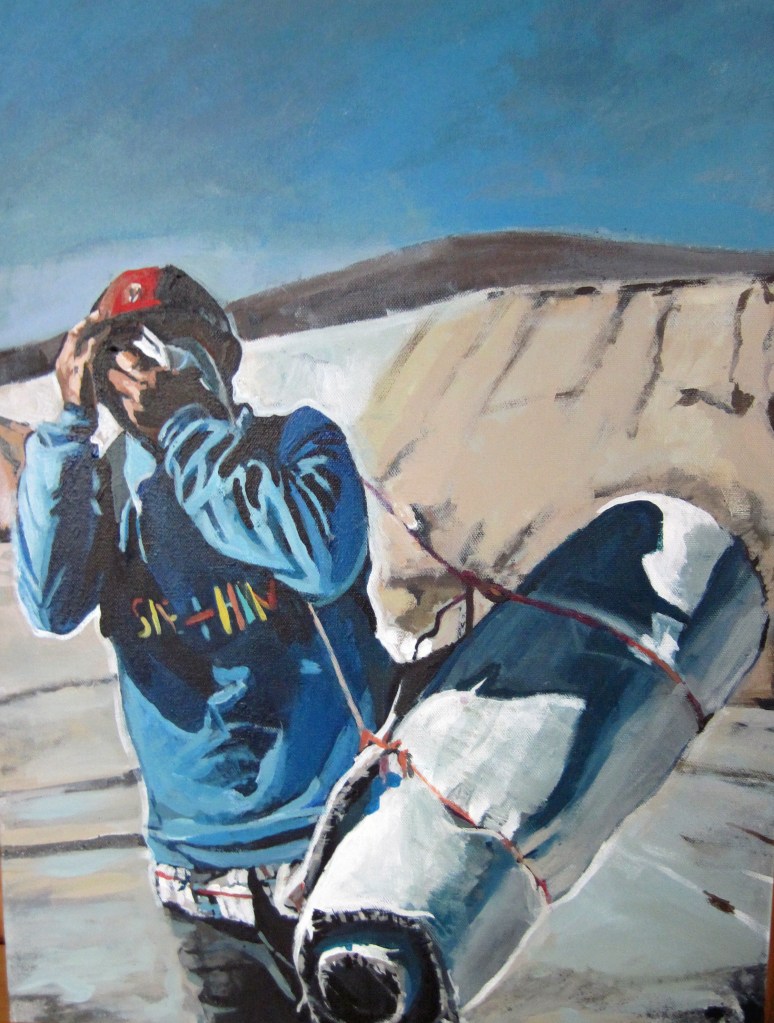
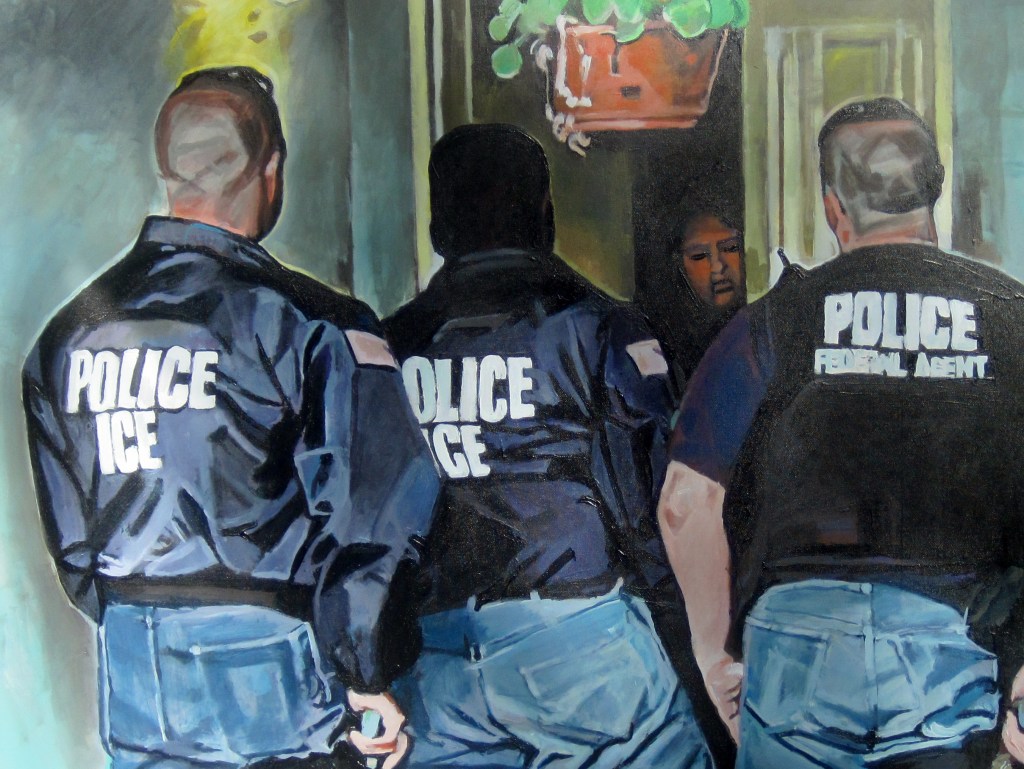
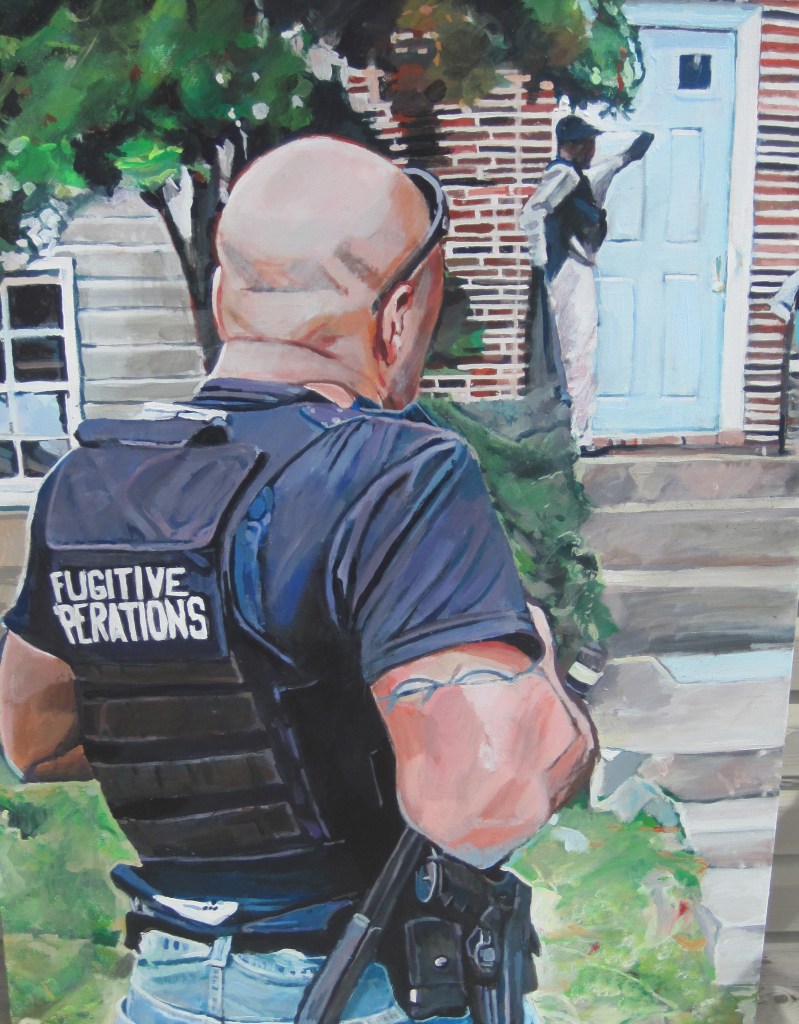
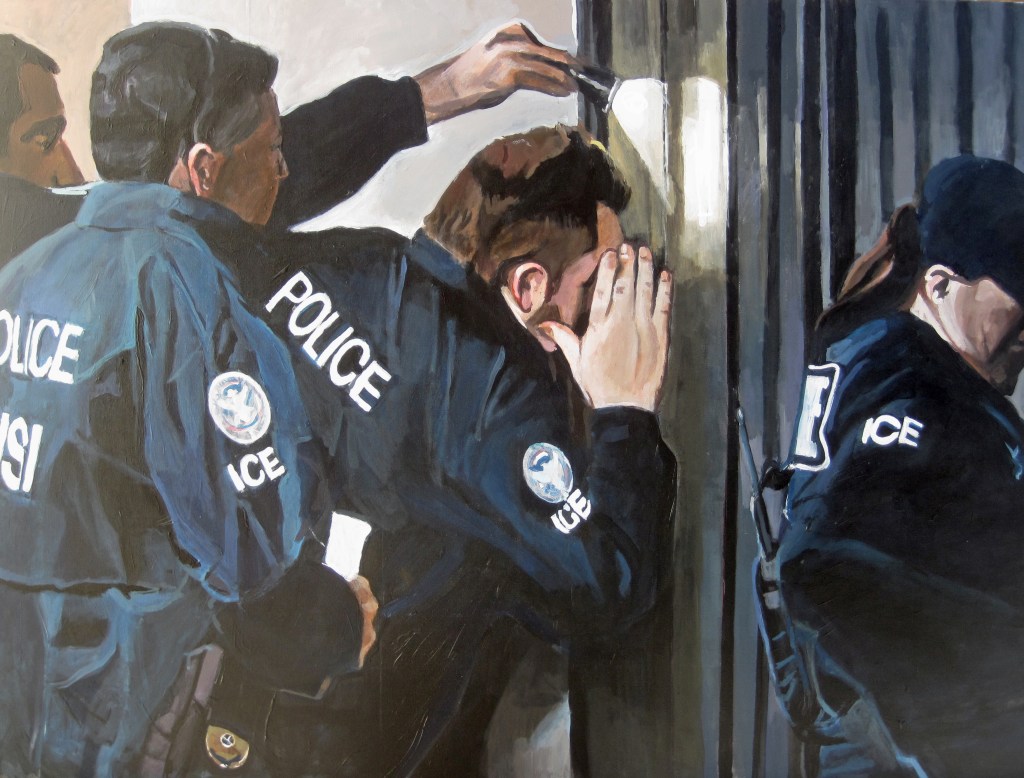
ICE Series: Partners, Questions, A Knock at the Door and Shining A Light, 2017.

ANTHONY CLEMENTI Paintings
UncategorizedANTHONY CLEMENTI
“Clementi’s painterly interpretations of sites of catastrophes are depicted with a critical (and perhaps deliberately neutral) gaze that lifts his carefully rendered eerie realities to a level of social protest. In what appears to be a rapid perhaps even urgent application of pigment, he describes visual truths in a manner that alludes to the transient visual vocabularies of journalistic/ documentary verisimilitude.
His are dire warnings of the approaching dystopia that may, in fact, have already arrived. ”
Tom Smart
CAPTURE 2014: Nova Scotia Realism
“A contemporary preoccupation with painters in general, let alone realists, is the concept of fragmented reality. The unreal in the real. Something is broken and can’t be fixed, therefore man continues to go through the existential motions of life. Clementi has stayed one step ahead of that slow and methodological position of the old realist strategy (that of Robert Henri’s journalist/artist plodding through the mud), and picks up the broken pieces of the visual world which are then in turn used to address the social and the immediate. The artist makes us stop and take note of the urgency behind the history of social realism as it takes place both in and beyond our borders today. “
Steven Rhude
ANTHONY CLEMENTI has been an artist, exhibition curator and art educator for more than 30 years. He participated in more than 60 exhibitions in North America and Europe. He has taught at Pratt Institute , Nassau College , New York Institute of Technology and the College of Mount Saint Vincent in New York and Mount Saint Vincent University in Nova Scotia , Canada. He has been a Executive Director of the Children’s Museum in Utica New York, and has curated exhibitions in Manhattan and Long Island, New York.
He presently lives and works in Nova Scotia, Canada with his wife Patricia Caryi.
Contact: clementianthony52@gmail.com
Phone: 902 850-2208 Cell:902 497-4436
Alone at Acadia Online Opening February 10, 2021 7pm (All are Invited)
This pandemic has shown how integral art is to our daily lives, sense of community and well- being. This curated exhibition presents the work of 18 Nova Scotian artists whose work responds to, reflects on the impacts of covid-19.
The online exhibition and related programming will be launched on February 10th.
Established in 1978, the Acadia University Art Gallery is a space for research, dialogue and community engagement with art.
artists: Rose Adams, Wayne Boucher, Geoff Butler, Louis-Charles Dionne, Frances Dorsey, Toni Clementi, Brandt Eisner, Celine Gabrielle, Annik Gaudet, Francois Gaudet, Bob Hainstock, Basma Kavanagh, Laura Kenney, Alexandra McCurdy, Bill Shaw, Susan Tooke, Miya Turnbull, Christopher Webb.
Virtual Exhibition At Link Below
http://gallery.acadiau.ca/Acadia_Art_Gallery/Exhibitions.html Click Exhibitions and scroll to 2021 for Virtual Exhibition.

Centenarians
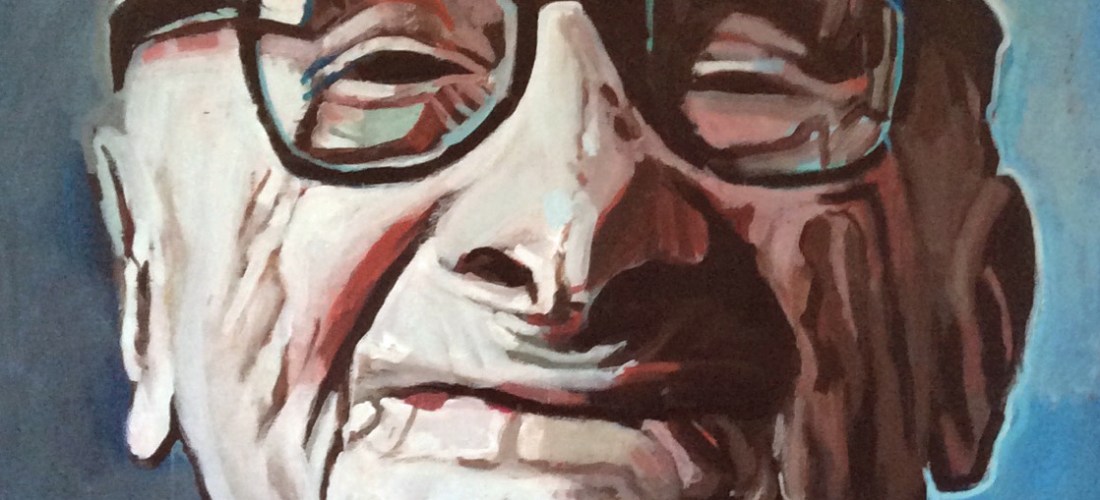
UncategorizedLiving in Atlantic Canada, one meets many folks who reached the century milestone. . Every night on the local news they are congratulated for another year on earth. In keeping with my series of portraits, I have been painting some representative people, some famous, some obscure. . Many of them are active and engaged like Zoltan, 107 from Toronto who makes violins.
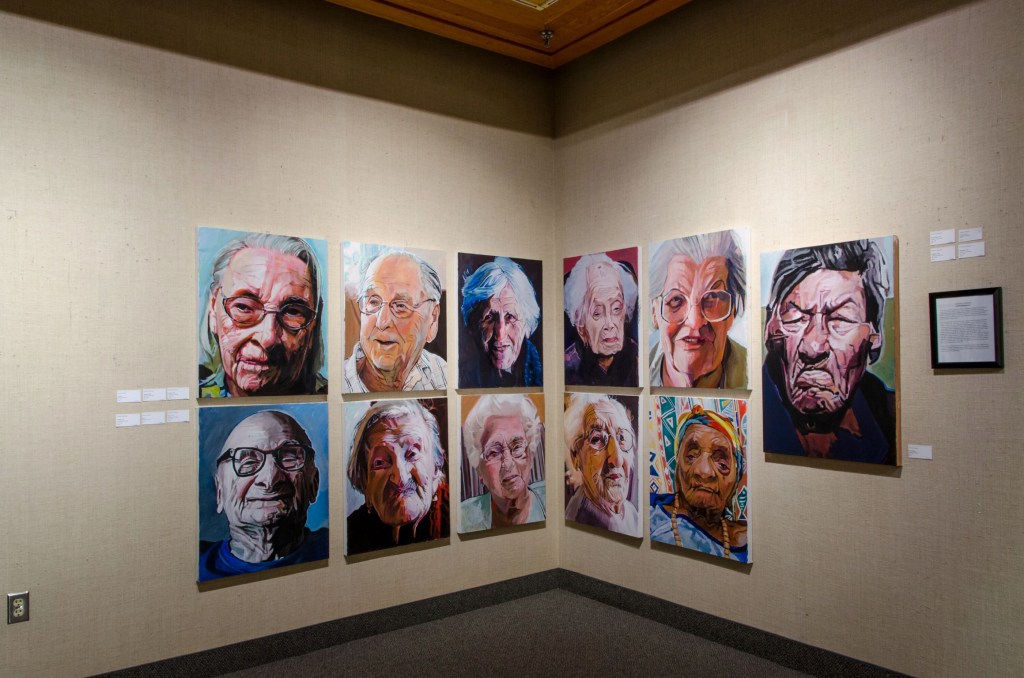
Installation View , Chase Gallery, 2018.
Trumpies
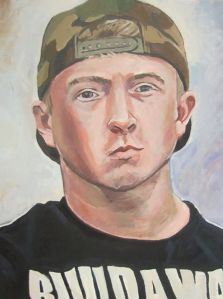
UncategorizedBefore the election I started to see more and more young people at Trump Rallies. Some from the Rust Belt, others from the South and Southwest, they seem to be in the contemplating a dim future, stolen by unknown forces and seeking retribution. Having just been to Italy where I had seen many Renaissance Portraits, some famous others obscure, I became interested in doing portraits. I collected many images of young people, isolated them and painted them to suggest different stylistic approaches, some linear and others painterly. Of course my hope was that Trump would not be elected but he was and I believe these “saints” hold a key to why, despite loosing the popular vote, he won an electoral victory by small margins in the industrial Midwest.
Trumpies: Saints: No. 1 through 4, 2016



T
UncategorizedCritical Incident at Acadia
Uncategorized
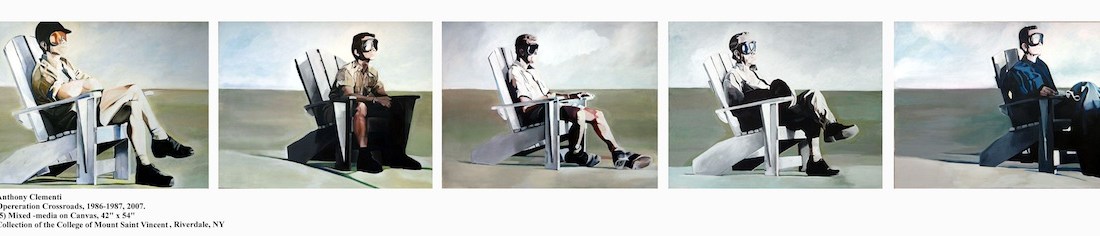
The Sitters (Operation Crossroads), 1987, was a series of five paintings that I completed in 1987. In 2007, I was asked to install the 5 paintings in the Library of Mount Saint Vincent College in Riverdale , New York, where it is still part of the permanent collection.
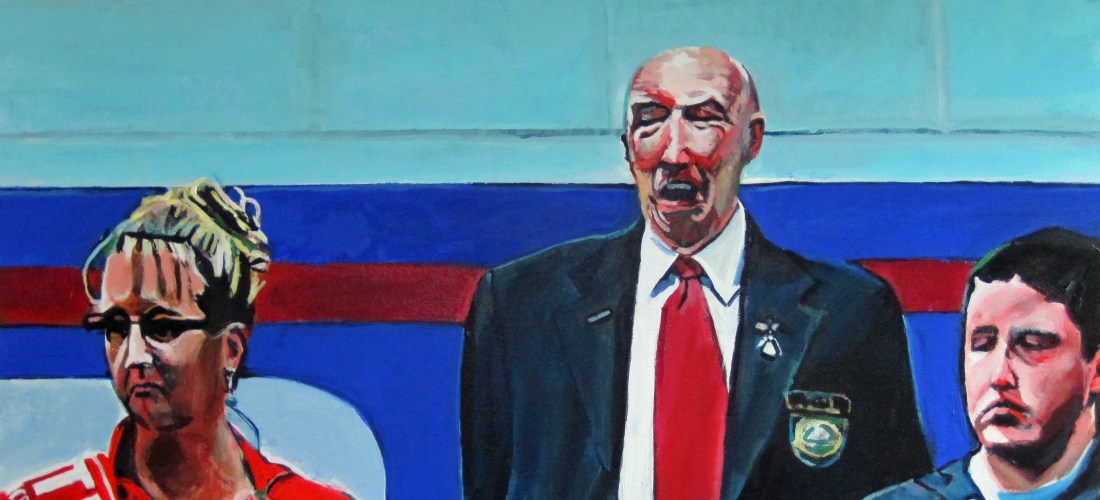
The series was based on an archival photograph, which someone had given me because at the time I was interested in what is commonly known as the Adirondack Chair. It documented the V. I. P. section of Scientists and Top Brass watching the first atomic explosion at the Bikini Atoll.
What I immediately realized is that the group photograph showed the quintessential pose and attitude of Americans; they where first and foremost “watchers”, “sitters” or what would later be called “coach potatoes”. They did not feel the need to protect themselves except for the goggles they wore as if they were impervious to any fall out from radiation. (Many sailors stationed there were later to contract cancer.) The islanders where resettled, A Sacrifice Zone was declared and the tests were conducted.
I first employed a technique that I still use today; isolating individuals from the group and creating a “primitive” background that I hoped would suggest the ambiance of the scene. It seemed to me that each isolated figure was an archetype of contemporary men; The jock, the working class hero, the father figure, the go-getter, the professor. Each isolated with their own thoughts as they witness destruction.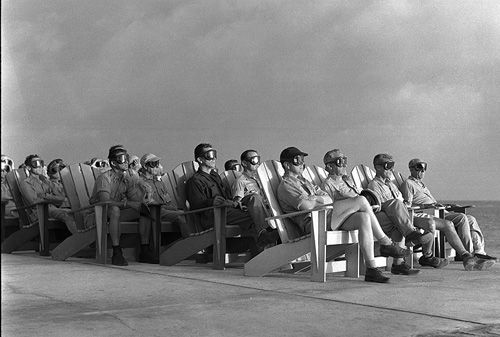
SACRIFICE ZONES
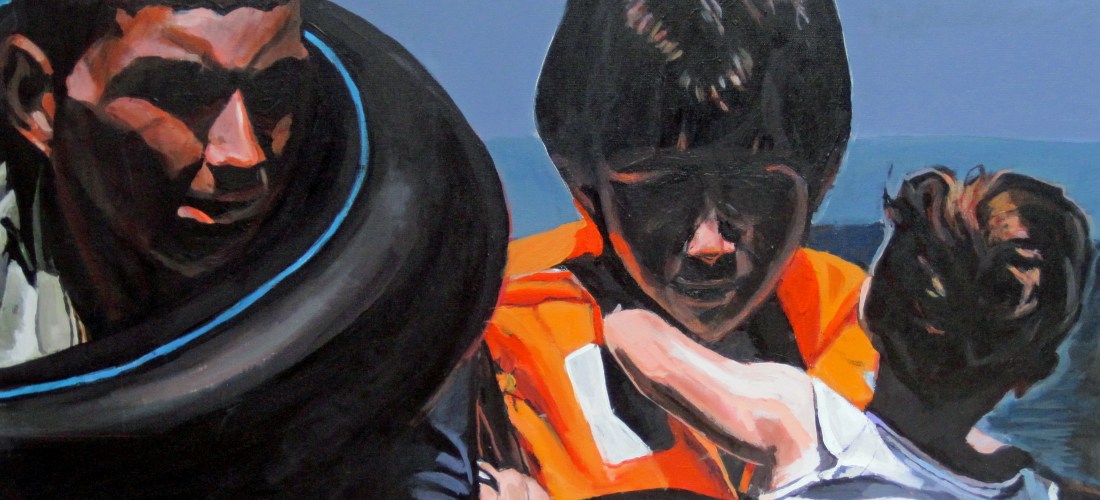
UncategorizedIf there is a unifying idea behind my work since 1982, it is the concept of the Sacrifice Zones. First discussed during the Cold War as likely out comes of nuclear fallout, the concept has broadened to include areas devastated and permanently impaired by environmental damage and disinvestment in low income and minority communities. The concept has emerged again at Fukushima and the devastating draughts in what used to be called the Fertile Crescent. The mass migration of rural workers to the cities sparked the uprisings in Syria and elsewhere and was most likely made worse by green house gasses.
I would also include pesticide related fish and, bee and bat kills, Pig Dumps in the Huangpu river in Shaghai , Chicken Culls because of H1N5 and even the mold infestations in the Northeast after Hurricane Sandy.
Recently commentators including Chris Hedges, Joe Sacco, Chris Lerner and Naomi Klein have written about the new Sacrifice Zones that have been brought about by short-term economic gain and
Klein writes in her most recent book, This Changes Everything, that:
“… in order to have sacrifice zones you need people and cultures that count so little that
they are considered deserving of sacrifice.”
Beginning with a series of paintings entitled Sitters(1987)and continuing with my latest series, the idea of restoring dignity and life to the millions of victims of environmental genocide has been my aim.

 anthonyclementi.gallery