
Author: Anthony Clementi
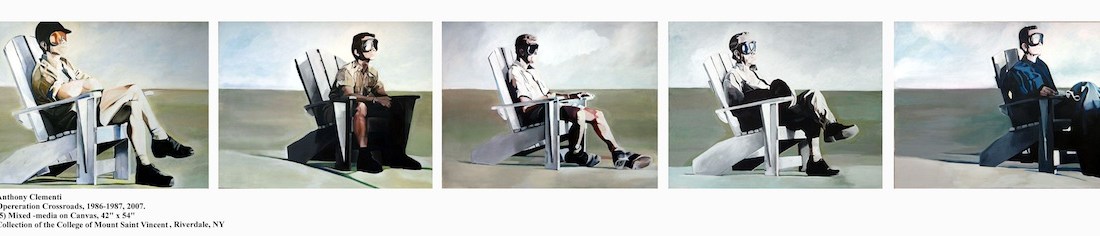
The Sitters (Operation Crossroads), 1987, was a series of five paintings that I completed in 1987. In 2007, I was asked to install the 5 paintings in the Library of Mount Saint Vincent College in Riverdale , New York, where it is still part of the permanent collection.
The series was based on an archival photograph, which someone had given me because at the time I was interested in what is commonly known as the Adirondack Chair. It documented the V. I. P. section of Scientists and Top Brass watching the first atomic explosion at the Bikini Atoll.
What I immediately realized is that the group photograph showed the quintessential pose and attitude of Americans; they where first and foremost “watchers”, “sitters” or what would later be called “coach potatoes”. They did not feel the need to protect themselves except for the goggles they wore as if they were impervious to any fall out from radiation. (Many sailors stationed there were later to contract cancer.) The islanders where resettled, A Sacrifice Zone was declared and the tests were conducted.
I first employed a technique that I still use today; isolating individuals from the group and creating a “primitive” background that I hoped would suggest the ambiance of the scene. It seemed to me that each isolated figure was an archetype of contemporary men; The jock, the working class hero, the father figure, the go-getter, the professor. Each isolated with their own thoughts as they witness destruction.
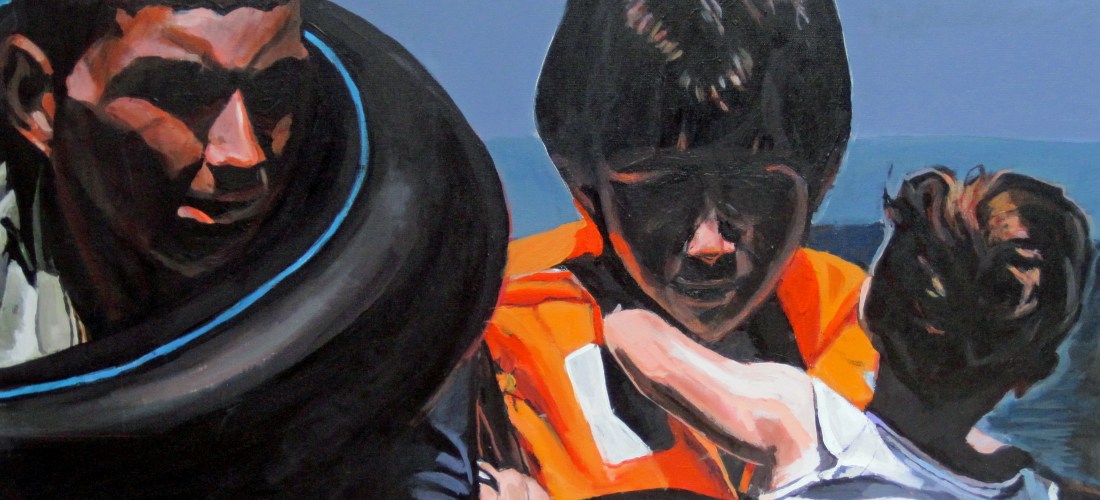
SACRIFICE ZONES
UncategorizedIf there is a unifying idea behind my work since 1982, it is the concept of the Sacrifice Zones. First discussed during the Cold War as likely out comes of nuclear fallout, the concept has broadened to include areas devastated and permanently impaired by environmental damage and disinvestment in low income and minority communities. The concept has emerged again at Fukushima and the devastating draughts in what used to be called the Fertile Crescent. The mass migration of rural workers to the cities sparked the uprisings in Syria and elsewhere and was most likely made worse by green house gasses.
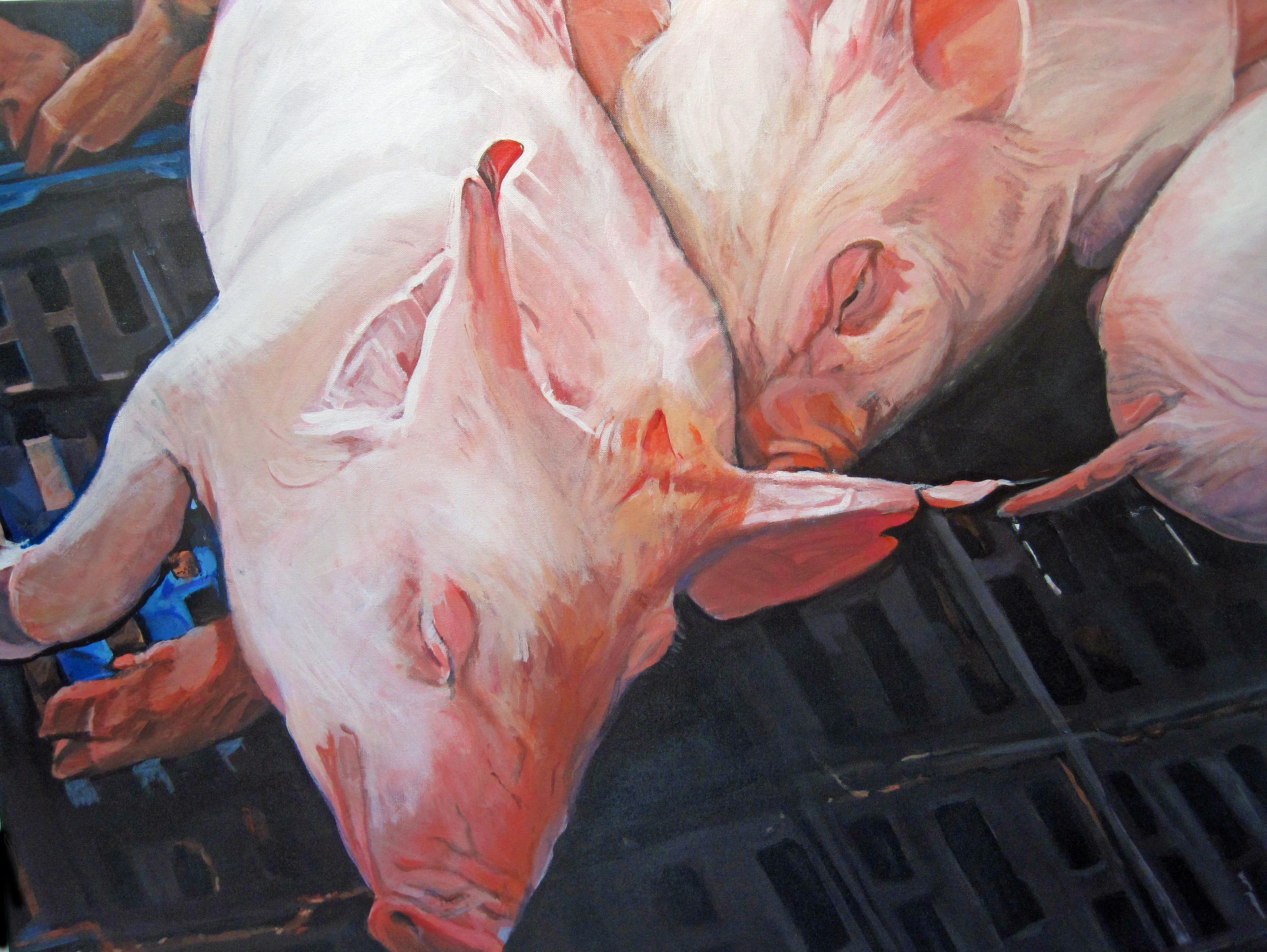
I would also include pesticide related fish and, bee and bat kills, Pig Dumps in the Huangpu river in Shaghai , Chicken Culls because of H1N5 and even the mold infestations in the Northeast after Hurricane Sandy.
Recently commentators including Chris Hedges, Joe Sacco, Chris Lerner and Naomi Klein have written about the new Sacrifice Zones that have been brought about by short-term economic gain and
Klein writes in her most recent book, This Changes Everything, that:
“… in order to have sacrifice zones you need people and cultures that count so little that
they are considered deserving of sacrifice.”
Beginning with a series of paintings entitled Sitters(1987)and continuing with my latest series, the idea of restoring dignity and life to the millions of victims of environmental genocide has been my aim.

THINGS
Uncategorized“No ideas but in things…”
William Carlos Williams
Beginning in the 1980’s, I began to think that ordinary objects were full of existential meaning and that no matter the artist, era or style; no matter the intent the conveyor of intention was a thing. Picasso’s Guitars, Duchamp’s Windows, Klee’s Fish but also Rembrandt’s costumes, Leonardo’s table setting and all Northern Painting of the 15th and 16th Century bares witness to Williams’ maxim.
I have tried to think of the epitomes of our era and which objects are characteristic of our unique time and place. Because of the pervasive nature of the mass media the world seems to be rife with calamity and disaster.
Hazmat suits, goggles, life preservers and plastic garbage bags are the stuff we are made of.
These are all optimistic objects which speak of survival.
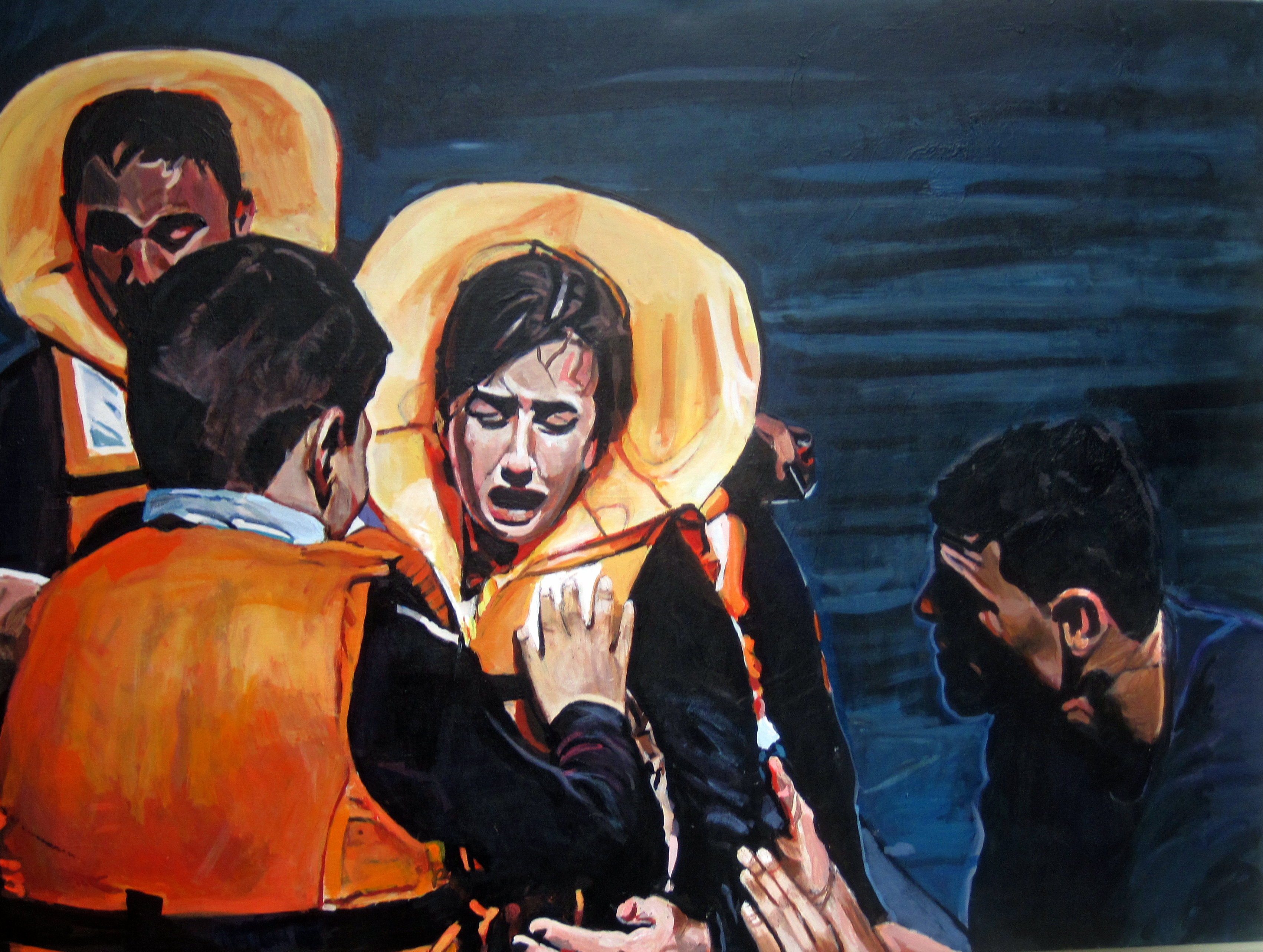
Working In Series:
UncategorizedEver since the 1980’s I have worked in Series format. It seems to me that one painting alone cannot do justice to a complex theme. My influence here is of course Thomas Cole but when I was a student, it seemed to me that all my favourite artists were working in Series. Everyone from Johns , Marisol, Dine and Warhol and later Close had staked paths which emphasized the continuity and interrelation of themes. Of course the work of Alex Katz, Alfred Leslie and Philip Pearlstein often was inherently serial in nature but so too were the paintings of Dekoonig, Kline and Reinhardt. I think that “TYPOLOGY” is one the basic categories of thinking and therefore working in series makes profound sense.
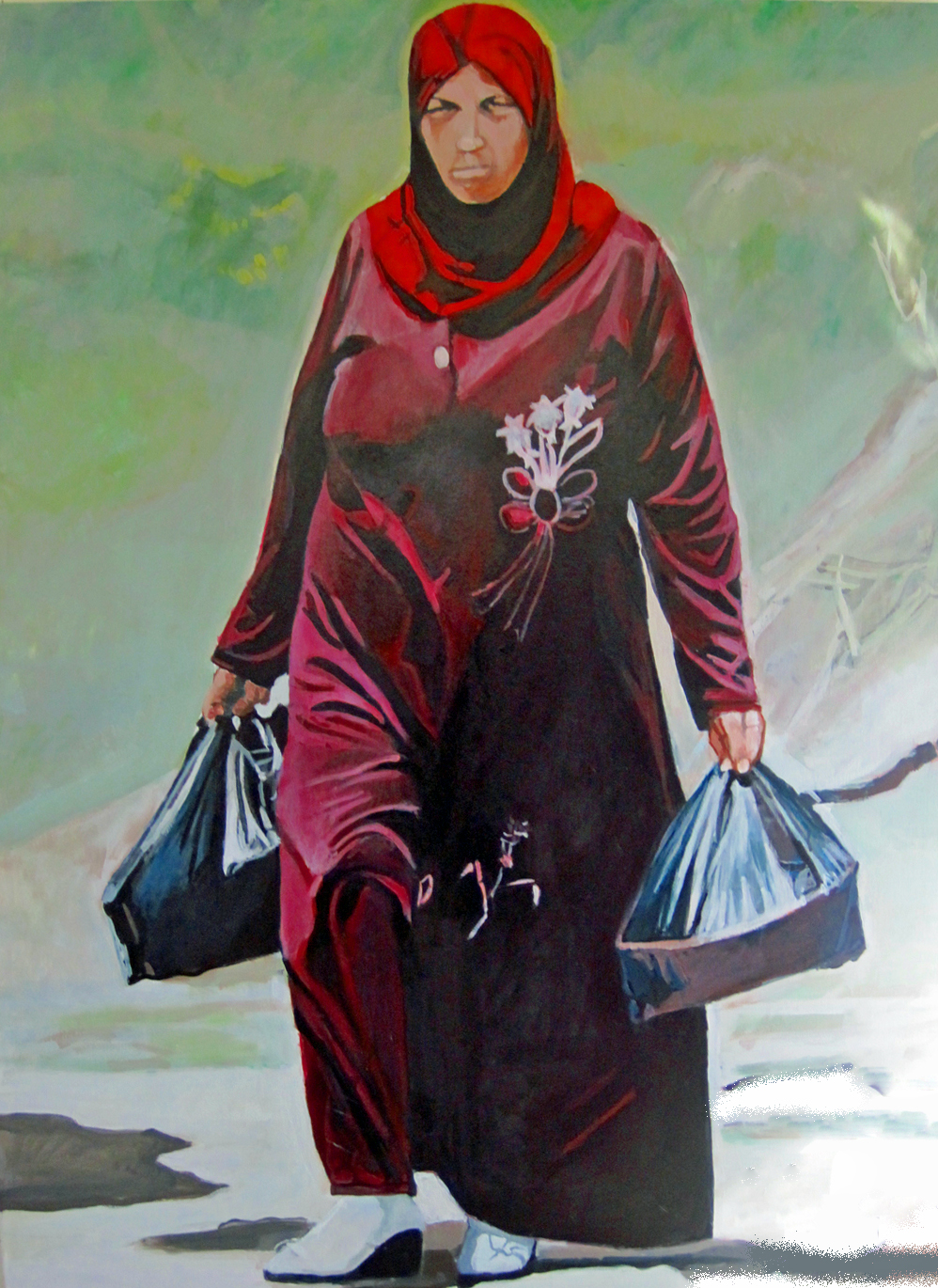
Below are some of the paintings I have been working on in a Series called Syrian Refugees.

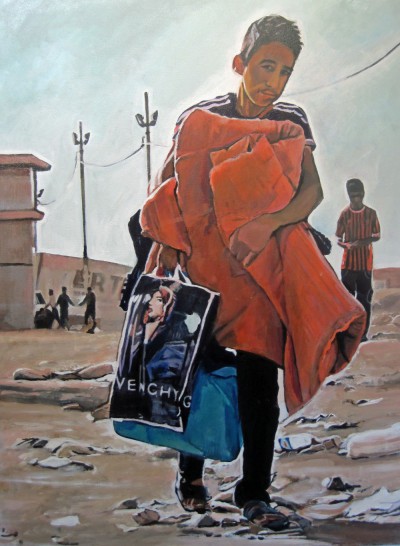


Endangered Series, 2014-2015
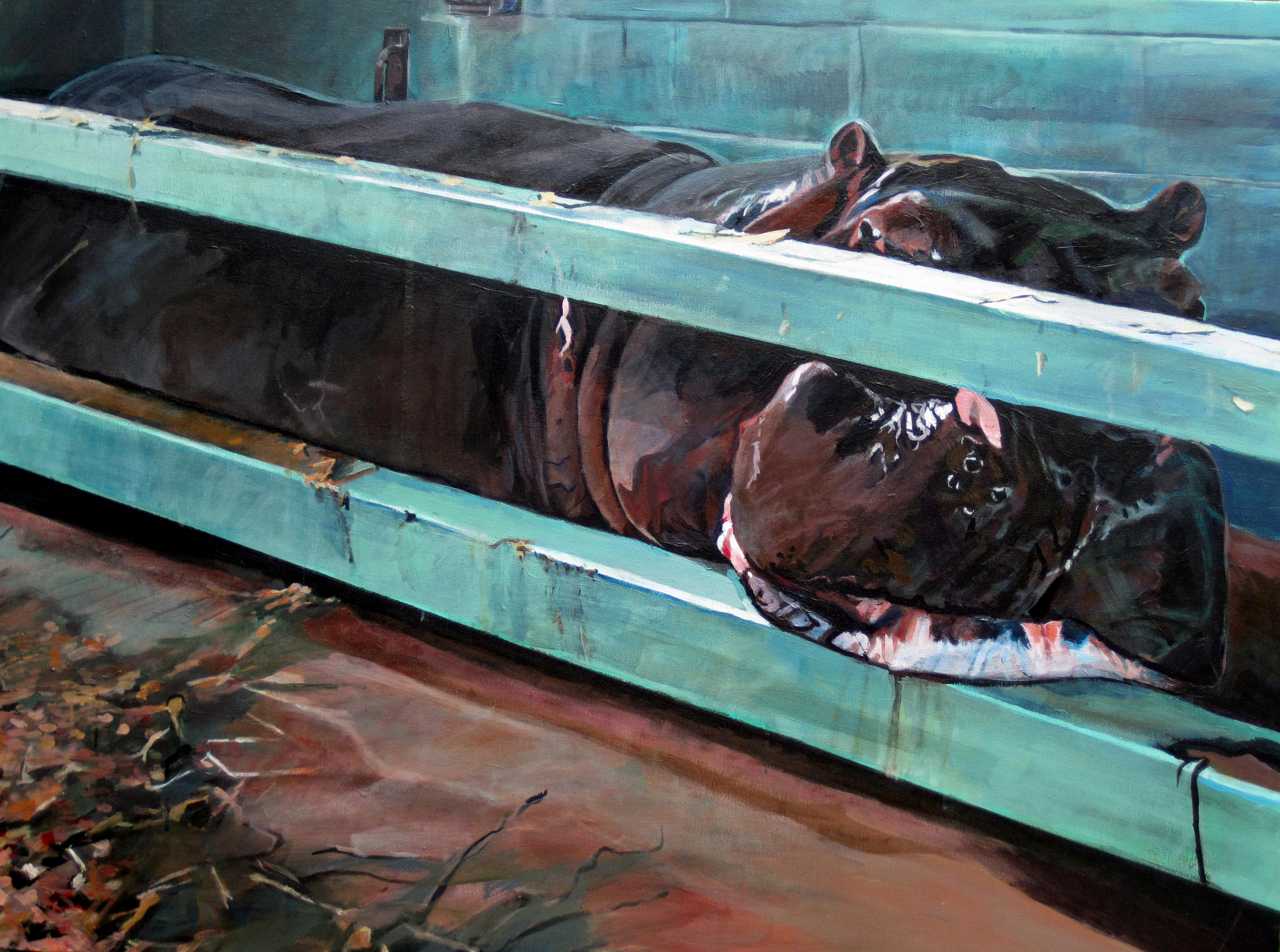
EndangeredWe share the world with animals. They were the first subject of art. As John Berger has written they were the first “other”, worshipped, bred and sacrificed but in the modern world animals have become marginalized. Still, every so often we understand that we have made the planet inhabitable to life, and that while they are different they are also similar-they breathe, bleed and die like us. Berger called this the first existential “Duality”. They are subject to the same stresses of Climate Change and Viruses and chemical pollution. In recent years, pigs have floated down rivers, bats have fallen from the skies, bees have died mass deaths and dogs and wild boars with high concentrations of radiation have appeared. Once a Wise teacher asked me “What animal have we helped?”He didn’t expect an answer , I have none, except, perhaps like the ancestors, to honour their “presence”.
.

Fallen Bee, 2014 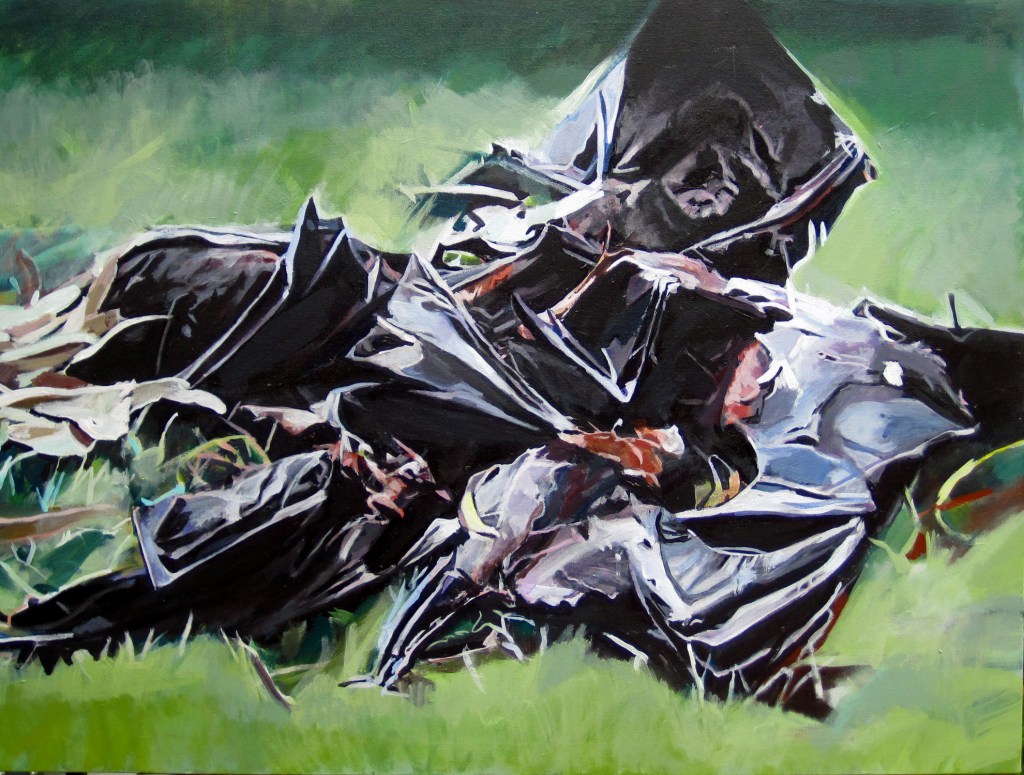
Bats fall From the Sky,Asutralia,2015
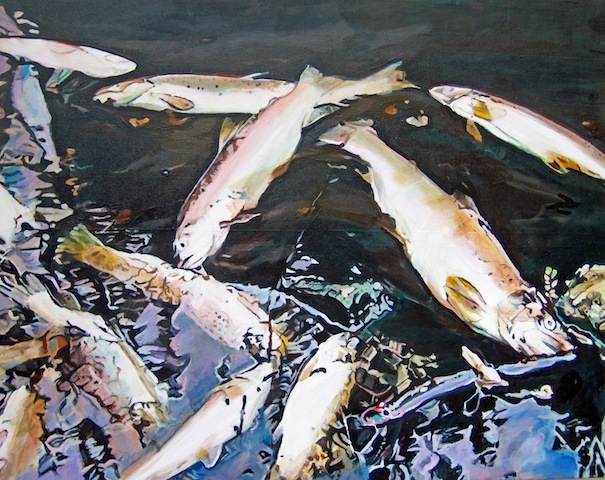
Ebola Series
Ebola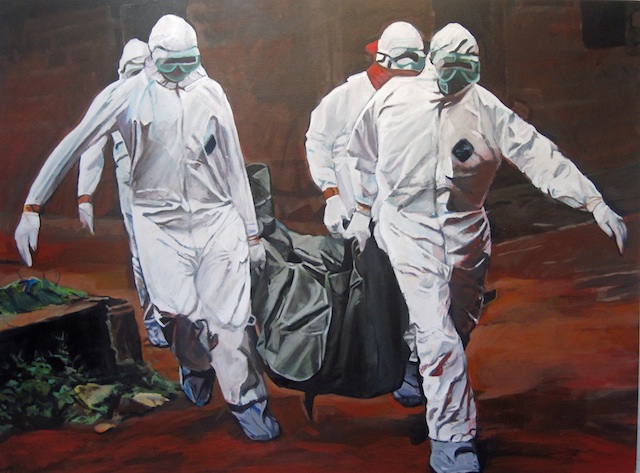
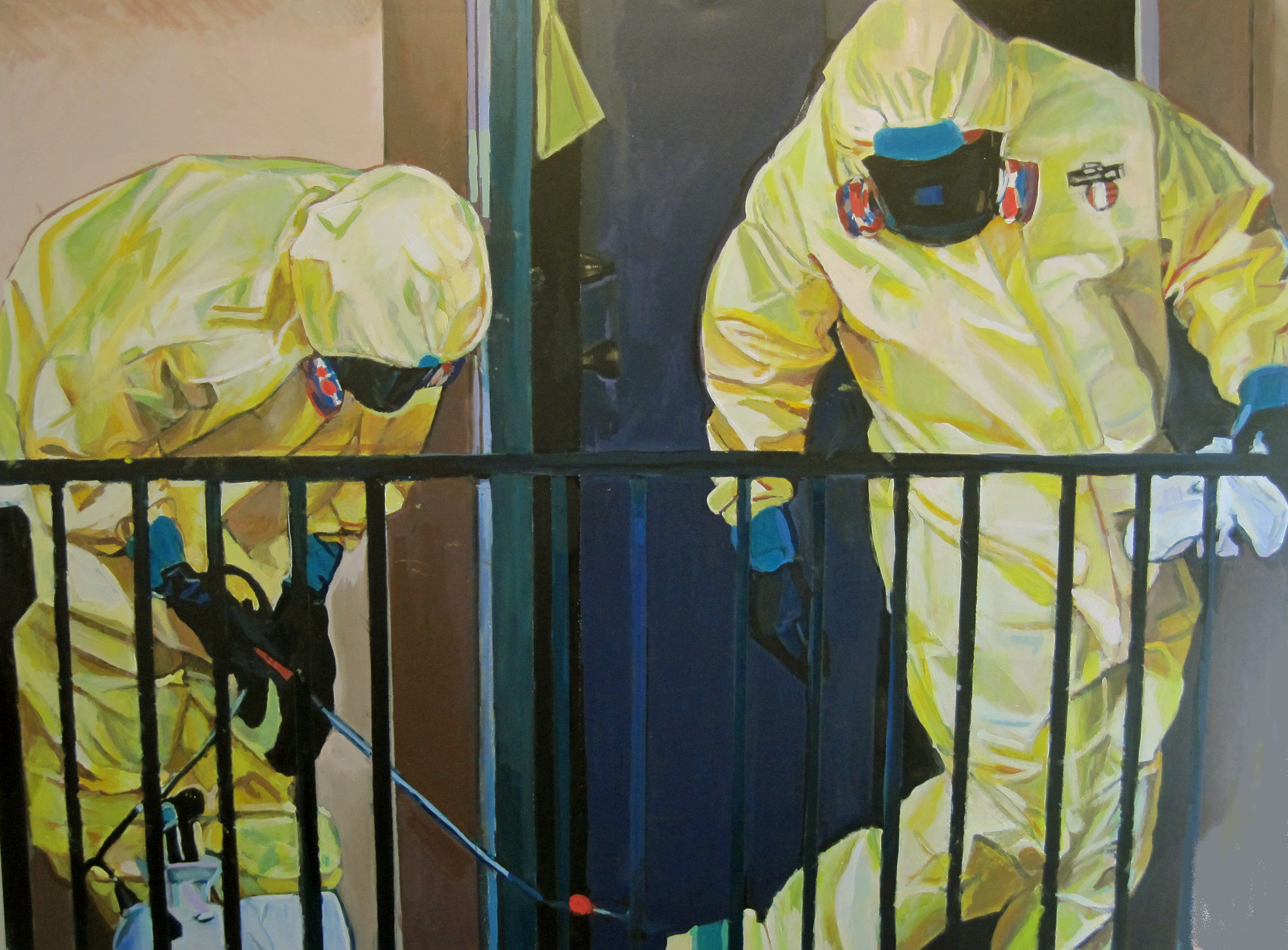
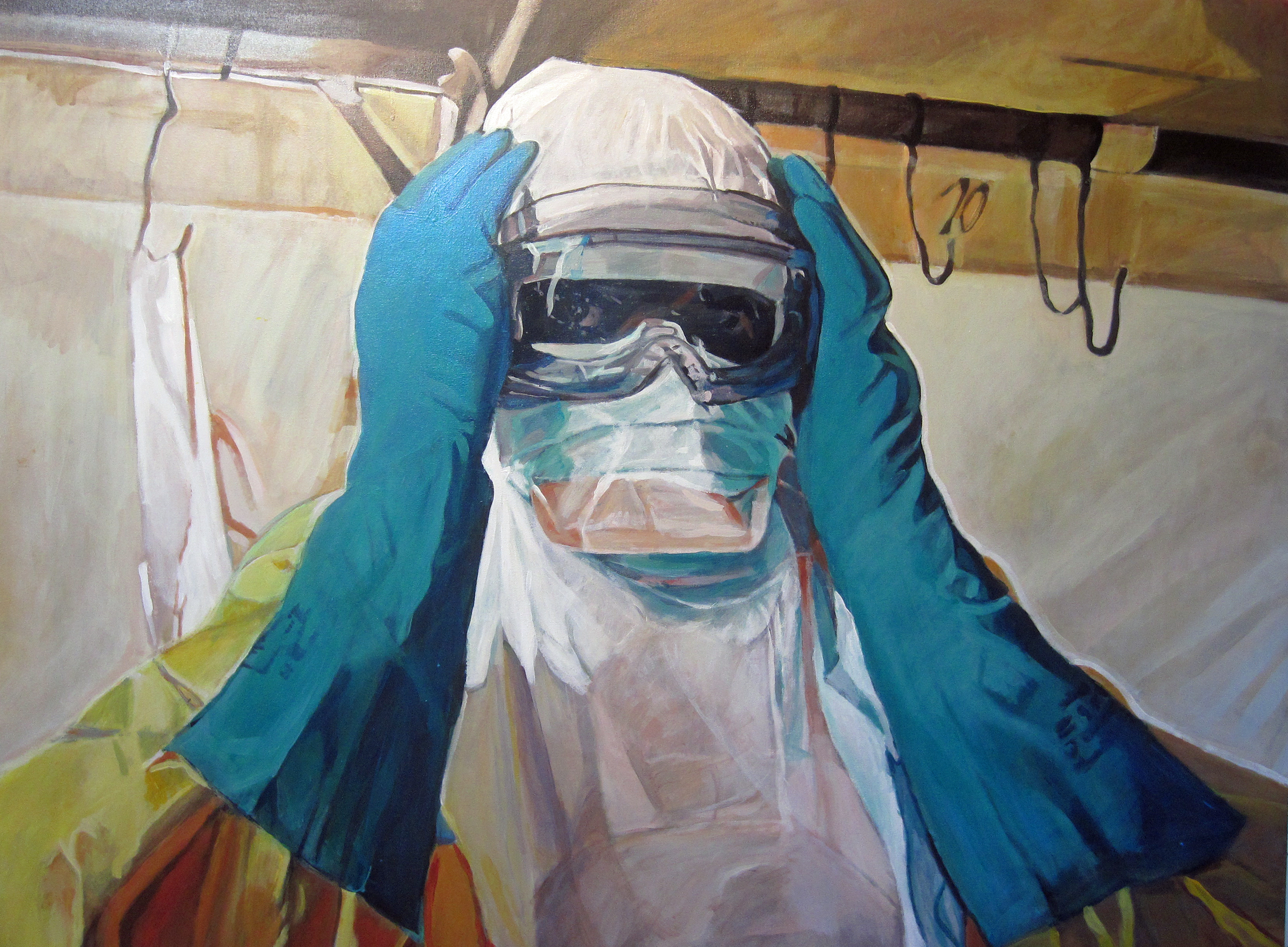

LANDSCAPE
UncategorizedIn recent years my paintings have explored the precarious relationship between Technology and Nature.
In our time, Climate Change has given way to a Nature that can no longer be seen as separate and apart from extended objects.
The 2012 Tsunami and the Meltdown at the Fukushima Nuclear Plant is a case in point; The tsunami was made more dangerous by the human-made events before and subsequent to the great wave. In the aftermath an army of workers dressed in paper suits went about to measure and to clean up after the devastation with shovels and even sticks— a puny response but a revealing one.
I am interested in these responses because I believe they reveal who we really are despite our advanced technological civilization.
Although I do not use the term “Realist” to describe these works, Art History informs my work. In the Nineteenth Century the Industrial Revolution had caused cultural anxiety. In Europe, positivist thinking produced Realism; In North America, Thomas Cole warned of the decadence of Europe* in which hubris had led civilization to ignore Nature and was thus, in peril. He developed a painting style in which narrative and philosophical discourse was embedded in Landscape. His optimistic outlook advocated for a “Development” in which Civilization and Nature would seek balance in the New World; although he was too optimistic, he realized the central tension in North American painting in every genre that was to follow.
* The Course of the Empire Cycle
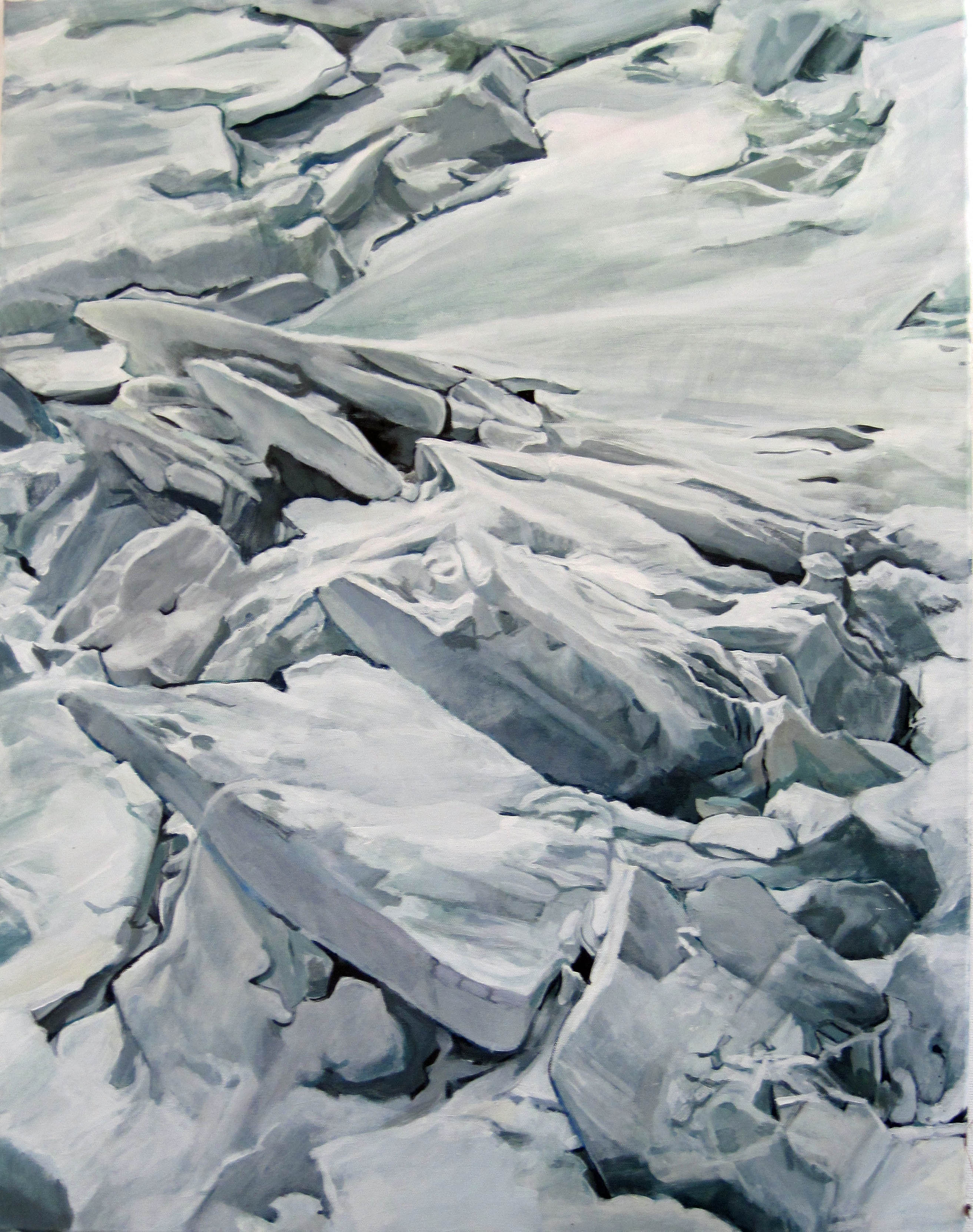 Ice Floe, Saint John River, 2011.
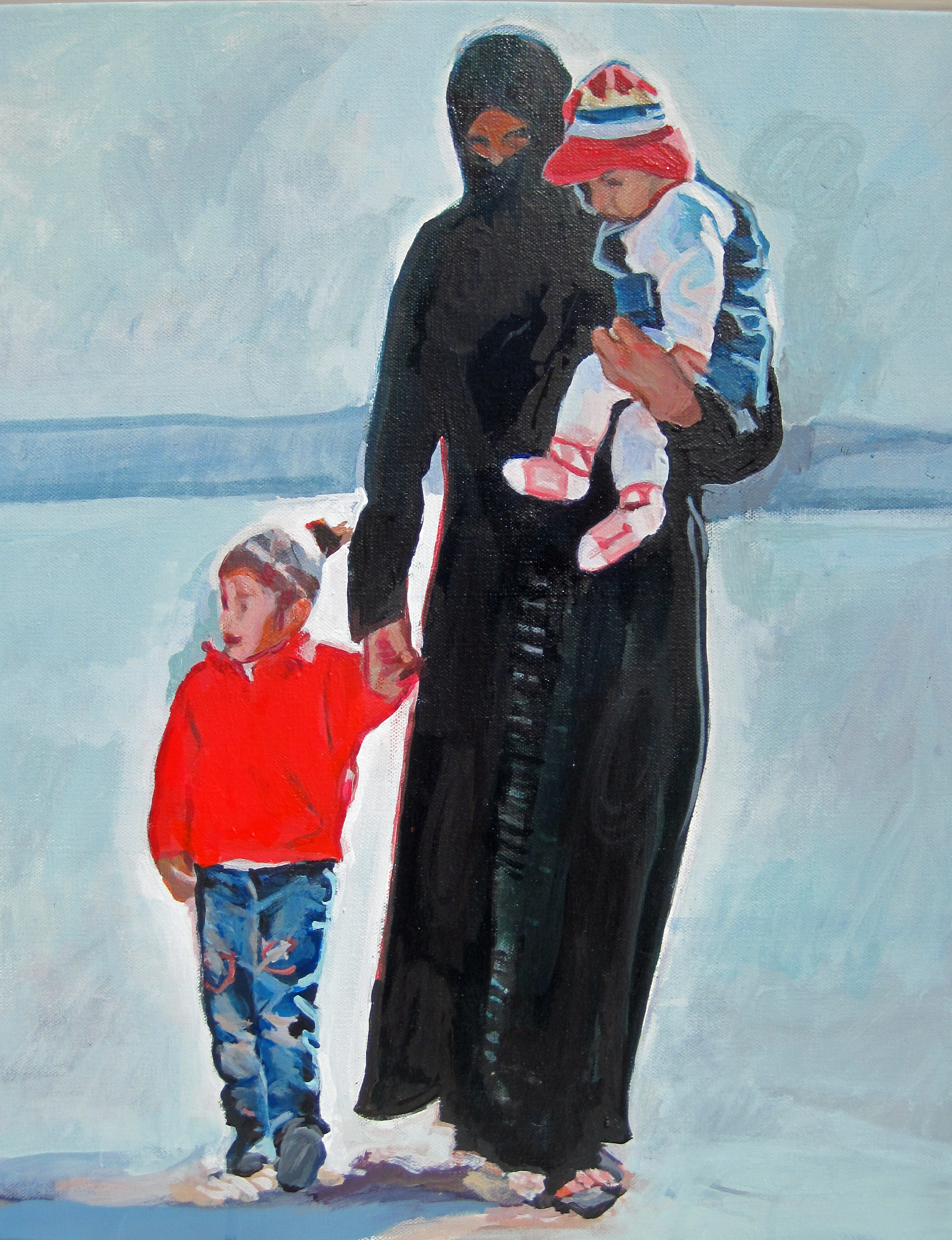
Syrian Grandmothers, 201
UncategorizedThe refugee Crisis in Turkey, Iraq and recently in Europe has created a new category of the dispossessed; grandmothers dressed in black sometimes with face covered clinging to children they are compelled to comfort while their parents find work or food or shelter.
FUKUSHIMA SERIES 2012-2013
Uncategorized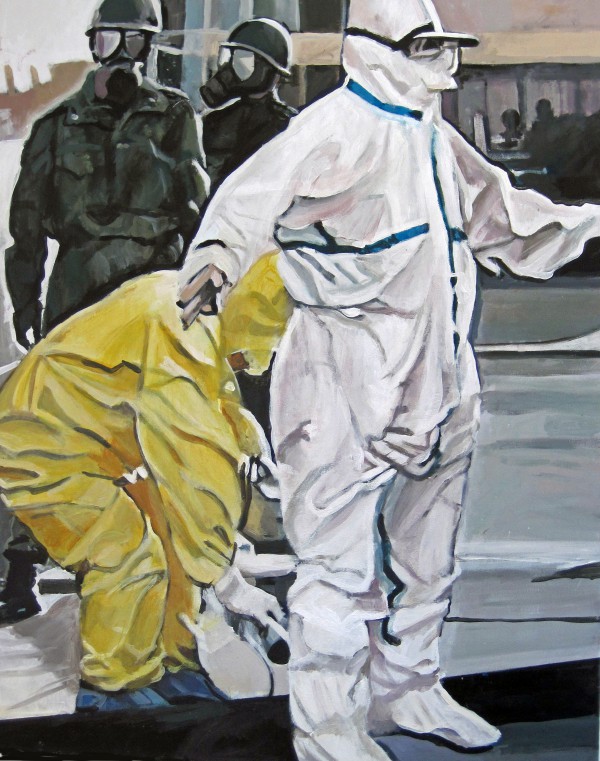 Checkpoint, 2012
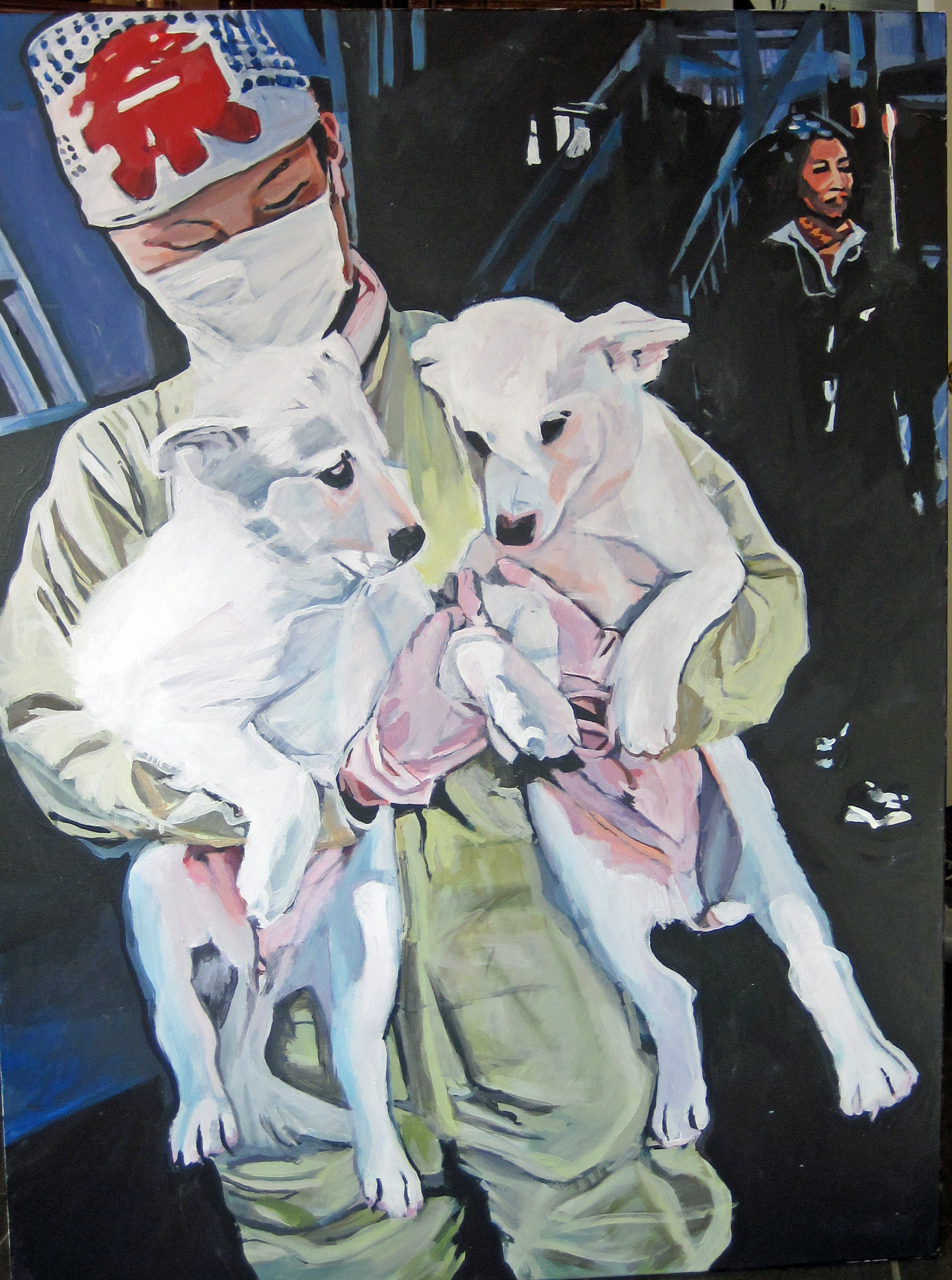 Fukushima Puppy Rescue, 2013.
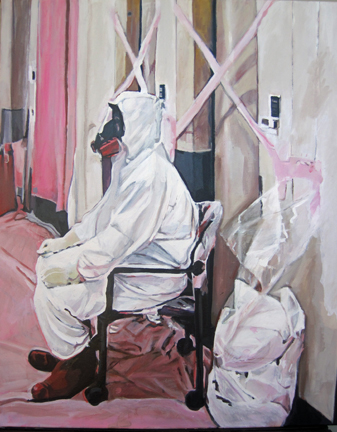 Pink Room, 2013
 anthonyclementi.gallery